Services


Sectors
Insights
COMMERCIALIZATION
Insights







Follow Us
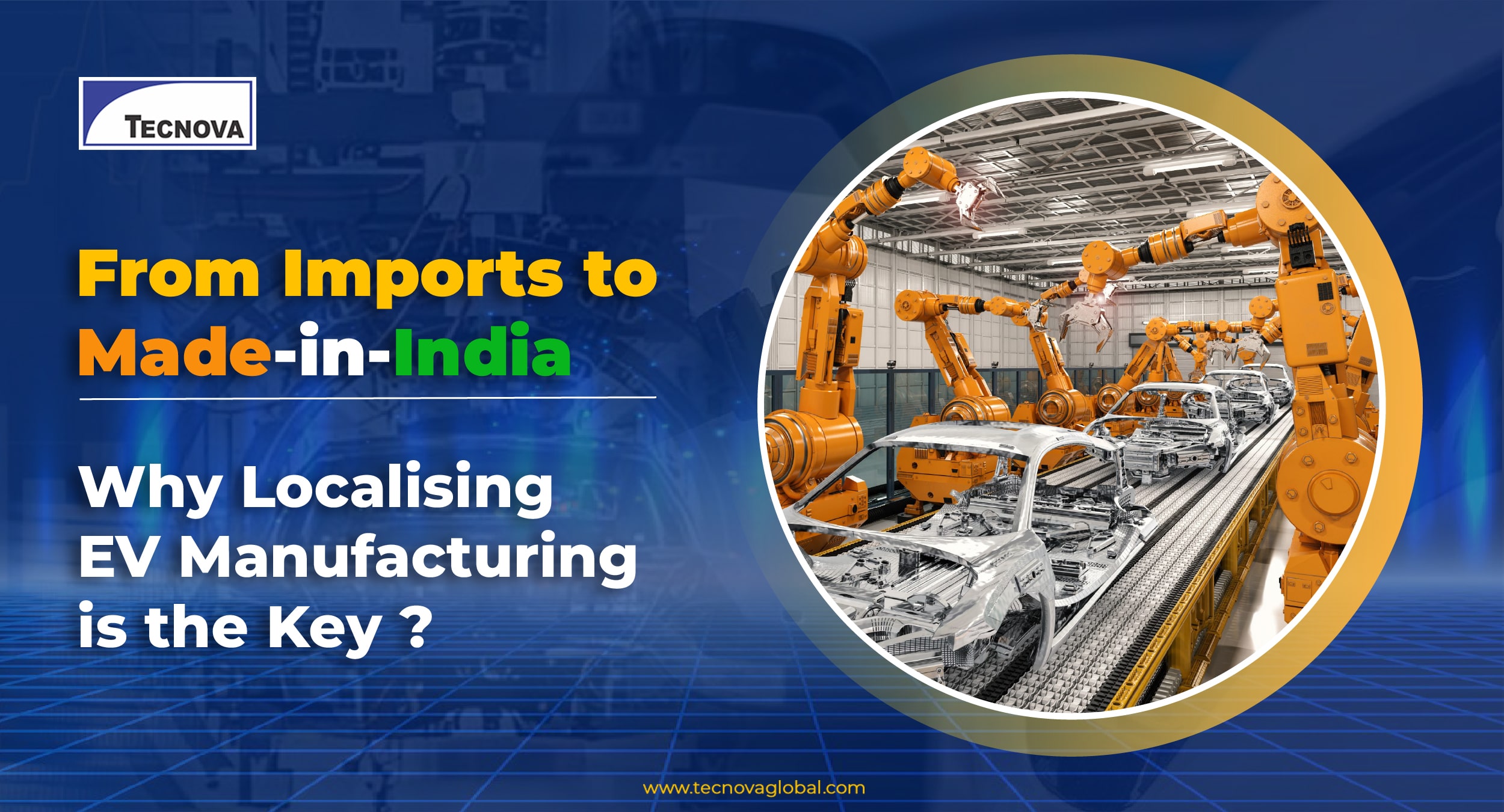
From Imports to Made-in-India: Why Localising EV Manufacturing Matters
India’s EV momentum is accelerating faster than ever—40% EV sales expected in 2025, 18 new next-gen models lined up, and government policies pushing for deeper localisation. With rising demand and strategic incentives, now is the ideal moment for global players to bet on "Made-in-India" EV manufacturing.
What’s Fueling the Localisation Push?
Major Roadblocks
Government Boosters
Why Localisation is Strategic for Global OEMs
Bridging the Gaps
How Tecnova Supports Your EV Localisation Journey
Why Tecnova Is the Preferred Partner
Is India the right place for EV manufacturing investment?
As per the latest report, the EV sales in India are anticipated to touch 40% in 2025 by selling around 1,38,606 units. Consequently, auto brands are making more EV cars. Among 28 vehicles lined up to launch in 2025, 18 are next-gen EV models.
All this data reflects a clear trend: inclination towards EV adoption. Considering the market and consumer preferences, there will be no better time to localise EV manufacturing in India than right now!
This blog serves as a guide to India’s EV industry growth, localisation, governmental support, challenges and more.
The EV industry in India is on smooth wheels. To encourage it even further, the Ministry of Heavy Industries issued an update about the localisation rule under the new PM Electric Drive Revolution in Innovative Vehicle Enhancement (PM E-Drive) Scheme.
According to the update, the Government of India has banned the import of certain critical components of EVs. Parts, such as battery modules, must be manufactured in India. Manufacturing processes, like cell-to-cell connection and thermal system integration, should also take place in India.
In addition to this, other factors are also driving India to localise the EV manufacturing process, such as:
● Increasing demand
In 2025, EV penetration in India jumps to 7.8% from 7.1% in 2024. As of February 2025, the total number of registered EVs on the road is 5,675,000. With the rising demand for EVs among consumers, localising EV manufacturing has become a necessity.
● Heavy import duties
When brands import parts, they have to bear heavy import duties and tariffs. That is why localisation is better than importing components. Recently, the Indian Government reduced import duties on 35 capital goods to increase domestic manufacturing of EV batteries.
● Supply chain resilience
Reliance on a single country for EV parts supply can increase supply chain disruptions. As a result, automotive giants are opting for electric vehicle localisation to reduce the dependence on single-source imports.
.jpg)
India is on a mission to create a fully localised EV ecosystem. As per the International Energy Agency (IEA), 80% of all EVs produced in 2024 are locally manufactured in India.
However, there are certain challenges that EV manufacturers may face in India. Take a look:
1. Shortage of raw materials
There are various critical minerals, like lithium, that are unavailable in India. Inaccessibility of materials disrupts component localisation and production. For example, a leading EV manufacturer reduced its production in the first half of FY25-26 due to rare earth shortages.
2. Quality gaps
Precision is the utmost priority in the production of batteries, inverters, etc. While public and private ventures are upskilling local suppliers and contract manufacturers, many are still unaware of the global OEM quality standards. Their knowledge must be updated to ensure zero difference between locally and globally manufactured EVs.
3. Volume of demand
Though domestic demand is growing, many EV components must be ordered in huge volumes to bring the cost per unit down. Until the demand volume is huge, certain parts are more affordable to import than to produce.
4. Regulatory uncertainty
Changing policies and taxes can cause instability. For example, the Government of Maharashtra removed 6% of the EV tax plan to facilitate adoption. Foreign firms need a stable market to run a profitable business. Changing policies can lead to non-compliance at times.
5. Infrastructural challenge
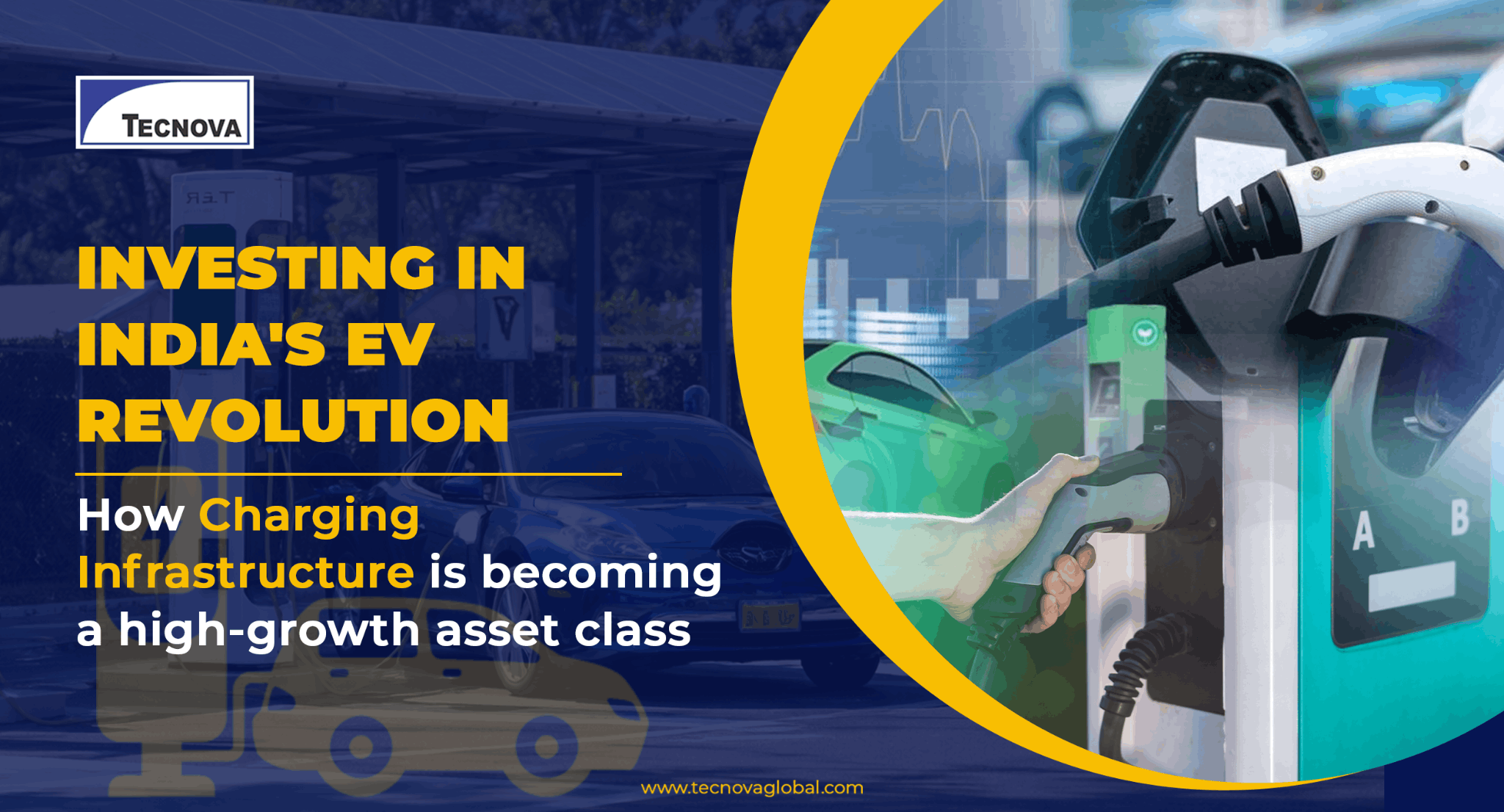
The biggest infrastructural challenge in India’s EV industry is the lack of charging stations. On top of that, different e-models use different charging connectors. Since there is zero uniformity, it makes it even harder to build a smooth, local EV ecosystem.
The Government of India has launched several policies and incentives for EV manufacturing companies. Take a look:
● Union Budget 2025‑26
To boost domestic EV production, the Union Budget 2025-26 proposed customs duties exemptions on required key minerals and capital goods. Raw materials like cobalt powder, zinc, and 15 other materials are exempted from basic customs duty (CBD).
● Production Linked Incentive (PLI)
PLI is a Government of India initiative to boost domestic manufacturing. To accelerate EV production, the government launched 2 different PLI schemes: PLI for the Automobile and Auto Component Industry in India (PLI Auto) and PLI for the National Programme on Advanced Chemistry Cell (ACC) Battery Storage.
While PLI Auto focuses on enhancing India’s manufacturing capacity for advanced automotive technology (AAT), PLI for battery storage encourages the production of chemistry cells to push India towards harnessing clean energy and electric mobility.
● PM E‑Drive
PM E-Drive is a collaborative EV-adoption improvement scheme between the Ministry of Heavy Industries and the Union Cabinet. The scheme aims to strengthen the EV ecosystem in India by incentivising all EV categories. The scheme applies to electric vehicles used for public transport and commercial purposes.
● FAME
FAME is one of the earliest schemes to push EVs towards localisation. The scheme was introduced in 2 phases. It offers demand incentives to support the development and market acquisition of electric vehicles.
These initiatives not only encourage local EV manufacturing but also focus on making India more attractive to global auto brands.
.jpg)
India is climbing high in EV manufacturing and component localisation. In 2023, the Geological Survey of India discovered 5.9 million tonnes of lithium in Jammu and Kashmir. With this discovery, Indian auto brands are focused on locally producing EV batteries.
Since the nation is on a mission to achieve 30% of EV market share by 2030, the sector is anticipated to record a growth of USD 113.99 billion by 2029.
The Government of India also launched an E-Vehicles policy in 2024 to make India a manufacturing hub for EVs. The policy allows auto brands to get lower import duties by establishing manufacturing facilities in India. This policy aims to promote localisation up to 50% in the upcoming 5 years.

Partnering with a local consultancy firm is extremely important to capture the Indian market strongly, and what could be a better choice than Tecnova, a firm with over 40 years of experience in market entry and business development strategy. We can help foreign EV players to:
● Navigate through the Indian regulatory environment and take advantage of governmental schemes
● Identify local suppliers, vendors, and contract manufacturers to build a fail-safe business in India
● Sketch localisation strategies considering infrastructural growth and availability of materials
If you are considering investing in EV manufacturing in India, now is the time. With the right approach and partners like Tecnova, you can ride this wave from imports toward fully local EV products.
From Imports to Made-in-India: Why Localising EV Manufacturing Matters
India’s EV momentum is accelerating faster than ever—40% EV sales expected in 2025, 18 new next-gen models lined up, and government policies pushing for deeper localisation. With rising demand and strategic incentives, now is the ideal moment for global players to bet on "Made-in-India" EV manufacturing.
What’s Fueling the Localisation Push?
Major Roadblocks
Government Boosters
Why Localisation is Strategic for Global OEMs
Bridging the Gaps
How Tecnova Supports Your EV Localisation Journey
Why Tecnova Is the Preferred Partner
Is India the right place for EV manufacturing investment?
As per the latest report, the EV sales in India are anticipated to touch 40% in 2025 by selling around 1,38,606 units. Consequently, auto brands are making more EV cars. Among 28 vehicles lined up to launch in 2025, 18 are next-gen EV models.
All this data reflects a clear trend: inclination towards EV adoption. Considering the market and consumer preferences, there will be no better time to localise EV manufacturing in India than right now!
This blog serves as a guide to India’s EV industry growth, localisation, governmental support, challenges and more.
The EV industry in India is on smooth wheels. To encourage it even further, the Ministry of Heavy Industries issued an update about the localisation rule under the new PM Electric Drive Revolution in Innovative Vehicle Enhancement (PM E-Drive) Scheme.
According to the update, the Government of India has banned the import of certain critical components of EVs. Parts, such as battery modules, must be manufactured in India. Manufacturing processes, like cell-to-cell connection and thermal system integration, should also take place in India.
In addition to this, other factors are also driving India to localise the EV manufacturing process, such as:
● Increasing demand
In 2025, EV penetration in India jumps to 7.8% from 7.1% in 2024. As of February 2025, the total number of registered EVs on the road is 5,675,000. With the rising demand for EVs among consumers, localising EV manufacturing has become a necessity.
● Heavy import duties
When brands import parts, they have to bear heavy import duties and tariffs. That is why localisation is better than importing components. Recently, the Indian Government reduced import duties on 35 capital goods to increase domestic manufacturing of EV batteries.
● Supply chain resilience
Reliance on a single country for EV parts supply can increase supply chain disruptions. As a result, automotive giants are opting for electric vehicle localisation to reduce the dependence on single-source imports.
India is on a mission to create a fully localised EV ecosystem. As per the International Energy Agency (IEA), 80% of all EVs produced in 2024 are locally manufactured in India.
However, there are certain challenges that EV manufacturers may face in India. Take a look:
1. Shortage of raw materials
There are various critical minerals, like lithium, that are unavailable in India. Inaccessibility of materials disrupts component localisation and production. For example, a leading EV manufacturer reduced its production in the first half of FY25-26 due to rare earth shortages.
2. Quality gaps
Precision is the utmost priority in the production of batteries, inverters, etc. While public and private ventures are upskilling local suppliers and contract manufacturers, many are still unaware of the global OEM quality standards. Their knowledge must be updated to ensure zero difference between locally and globally manufactured EVs.
3. Volume of demand
Though domestic demand is growing, many EV components must be ordered in huge volumes to bring the cost per unit down. Until the demand volume is huge, certain parts are more affordable to import than to produce.
4. Regulatory uncertainty
Changing policies and taxes can cause instability. For example, the Government of Maharashtra removed 6% of the EV tax plan to facilitate adoption. Foreign firms need a stable market to run a profitable business. Changing policies can lead to non-compliance at times.
5. Infrastructural challenge
The biggest infrastructural challenge in India’s EV industry is the lack of charging stations. On top of that, different e-models use different charging connectors. Since there is zero uniformity, it makes it even harder to build a smooth, local EV ecosystem.
The Government of India has launched several policies and incentives for EV manufacturing companies. Take a look:
● Union Budget 2025‑26
To boost domestic EV production, the Union Budget 2025-26 proposed customs duties exemptions on required key minerals and capital goods. Raw materials like cobalt powder, zinc, and 15 other materials are exempted from basic customs duty (CBD).
● Production Linked Incentive (PLI)
PLI is a Government of India initiative to boost domestic manufacturing. To accelerate EV production, the government launched 2 different PLI schemes: PLI for the Automobile and Auto Component Industry in India (PLI Auto) and PLI for the National Programme on Advanced Chemistry Cell (ACC) Battery Storage.
While PLI Auto focuses on enhancing India’s manufacturing capacity for advanced automotive technology (AAT), PLI for battery storage encourages the production of chemistry cells to push India towards harnessing clean energy and electric mobility.
● PM E‑Drive
PM E-Drive is a collaborative EV-adoption improvement scheme between the Ministry of Heavy Industries and the Union Cabinet. The scheme aims to strengthen the EV ecosystem in India by incentivising all EV categories. The scheme applies to electric vehicles used for public transport and commercial purposes.
● FAME
FAME is one of the earliest schemes to push EVs towards localisation. The scheme was introduced in 2 phases. It offers demand incentives to support the development and market acquisition of electric vehicles.
These initiatives not only encourage local EV manufacturing but also focus on making India more attractive to global auto brands.
India is climbing high in EV manufacturing and component localisation. In 2023, the Geological Survey of India discovered 5.9 million tonnes of lithium in Jammu and Kashmir. With this discovery, Indian auto brands are focused on locally producing EV batteries.
Since the nation is on a mission to achieve 30% of EV market share by 2030, the sector is anticipated to record a growth of USD 113.99 billion by 2029.
The Government of India also launched an E-Vehicles policy in 2024 to make India a manufacturing hub for EVs. The policy allows auto brands to get lower import duties by establishing manufacturing facilities in India. This policy aims to promote localisation up to 50% in the upcoming 5 years.
Partnering with a local consultancy firm is extremely important to capture the Indian market strongly, and what could be a better choice than Tecnova, a firm with over 40 years of experience in market entry and business development strategy. We can help foreign EV players to:
● Navigate through the Indian regulatory environment and take advantage of governmental schemes
● Identify local suppliers, vendors, and contract manufacturers to build a fail-safe business in India
● Sketch localisation strategies considering infrastructural growth and availability of materials
If you are considering investing in EV manufacturing in India, now is the time. With the right approach and partners like Tecnova, you can ride this wave from imports toward fully local EV products.









%20(1).png)
.jpg)
.png)

%20(1).png)
.jpg)


.png)


.jpeg)





.png)

.png)


.jpg)




.jpg)
.jpg)