Services


Sectors
Insights
COMMERCIALIZATION
Insights







Follow Us
Key Takeaways
➤ The auto parts industry is projected to reach USD 200 billion by 2030.
➤ India’s auto components sector hit USD 78.7 billion in FY25, growing at 14% CAGR.
➤ Auto parts exports reached USD 22.9 billion, boosting India’s global manufacturing status.
➤ Strong governmental policy push (PLI, FAME) is fueling rapid expansion.
➤ The EV market in India is set to surge at 57.23% CAGR by 2033.
How Tecnova Helps?
➤ Builds clear India market entry strategies and simplifies regulatory and compliance processes
➤ Connects foreign auto parts manufacturing firms with trusted local partners to promote collaboration
➤ Provides end-to-end India expansion support
The recent numbers of India’s auto parts manufacturing sector growth strongly affirm that. As per a report published by the Government of India, the industry has secured a turnover of USD 78.74 billion in FY25, growing at 14% CAGR in the last 5 years between 2020 and 2025.
Exports of this sector nearly touched USD 22.9 billion, thanks to the surging vehicle production, aftermarket and OEM incremental sales and persistent policy support. The shift towards e-mobility has also created transformative opportunities for parts manufacturers.
This article unfolds India’s auto components production future and sheds light on the driving forces behind this surge and the challenges that may constrain the growth.
The auto parts manufacturing sector contributed approximately 2.3% of GDP, and it is expected to rise more than 12% in 2026. Certain forces, such as increased demand-based production, post-sale profitability, and export expansion, are driving the growth of the auto components industry in India.
Together, these factors strengthen India’s robust development in manufacturing and deep integration in global supply chains. Let us take a look at these factors in detail:
1. Rising Domestic Vehicle Production
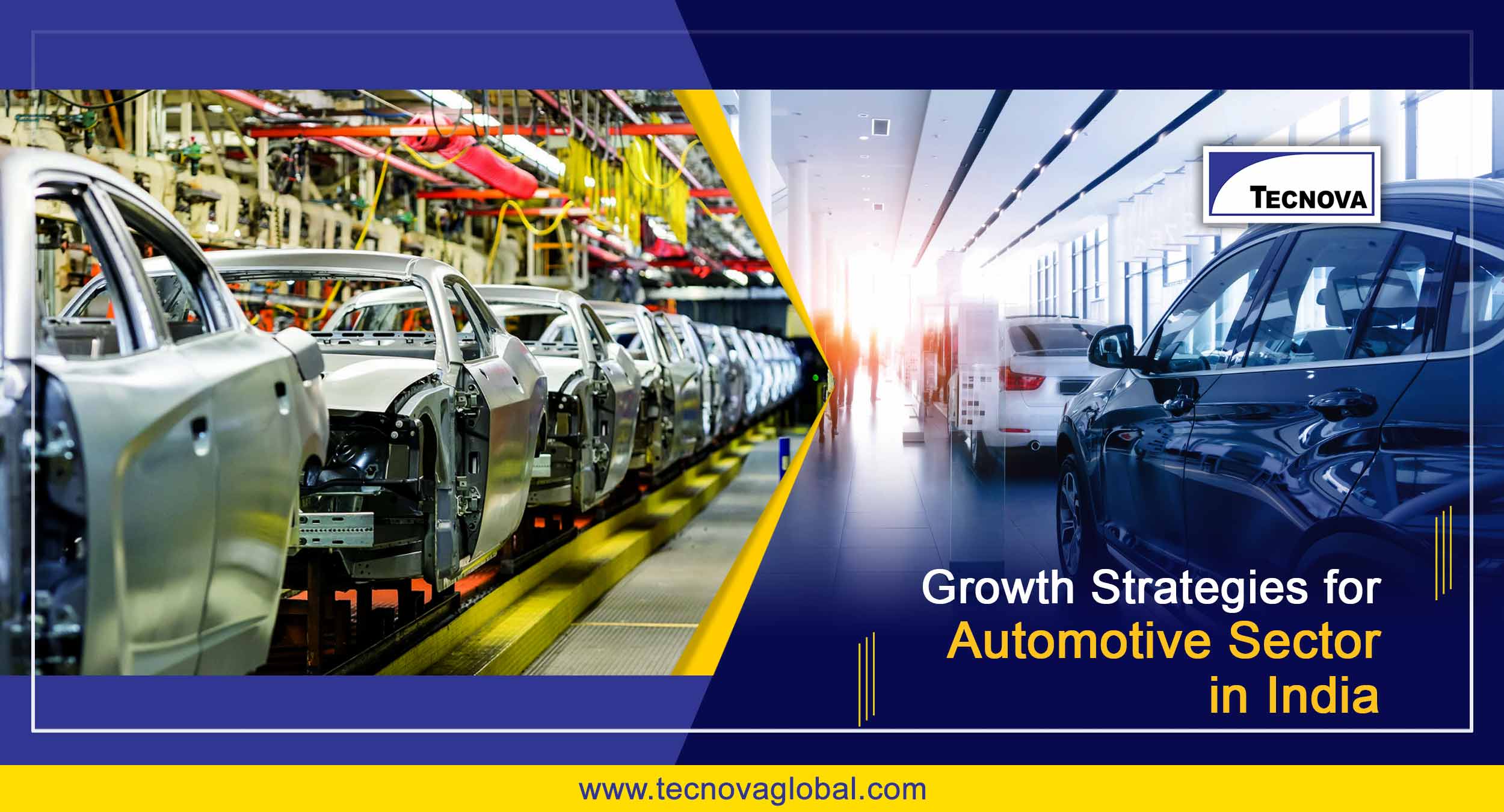
The Indian domestic automobile industry is one of the fastest-growing markets in the world. In FY25, India produced over 3.10 crore commercial vehicles, passenger vehicles, quadricycles, two and three-wheelers.
Currently, the nation stands as the largest producer of 3-wheelers, the 2nd largest manufacturer of 2-wheelers and one of the top 5 producers of commercial and passenger vehicles in the world.
Increased vehicle production directly fuels demand for auto parts. A recent governmental report reveals that the auto components production in India is expected to reach USD 145 billion by 2030 due to increased consumer demand and a focus on producing quality, value-added parts.
2. Strong Aftermarket Growth
The immense automobile and parts production directly drives the aftermarket growth. The auto parts aftermarket segment in India is valued at USD 11.6 billion. In FY25, the domestic supply of aftermarket sales recorded 10% of the industry turnover, while exports reached 19% and this is just the beginning.
In 2025, the Ministry of Heavy Industries introduced the Automotive Mission Plan 2047 (AMP 2047) as a strategic initiative to encourage India's transformation as per the Viksit Bharat 2047 Program.
Since the AMP targets to increase vehicle manufacturing to 50 million by 2030 and 200 million by 2047, the aftermarket segment will also capture a growing share of revenues. It will help India to stabilise demand, especially when new vehicle sales drop.
3. Export Expansion Opportunities
The Indian auto parts market aims to leverage different export expansion opportunities, driven by increased domestic vehicle production. Some of India's major export areas are Europe (USD 6.89 billion), North America (USD 6.19 billion), and Asia (USD 5.15 billion).
The industry generally exports 25% of its manufactured parts every year. However, the numbers are expected to rise as India plans to take advantage of the recent industry trends, ‘China Plus One’ and Global Value Chain (GVC) diversification.
For example, most multinational manufacturers, especially US-based, consider India as a sought-after alternative to maintain manufacturing amidst China’s supply chain disruption and high labour costs. This shift is known as the ‘China Plus One’ trend.
The Global Value Chain (GVC), on the other hand, is a strategic approach to diversifying the supply chain among geographically strategic locations like India and Vietnam to mitigate single-source dependency.
For instance, a major German auto component manufacturer recently established 2 advanced manufacturing units in Morinda, Punjab, in an area of 40,700 sq.m and invested USD 45 million to serve both the domestic and Asian markets proficiently.

Government policy has played an important role in strengthening the auto parts manufacturing industry in India with evolutionary initiatives such as PLI Scheme, Make in India, FAME India Scheme, etc. Subsequently, let us take a close look at them.
1. Make in India and PLI Schemes
The Production Linked Initiative scheme (PLI) is the financial engine of the Make in India initiative. As the Make in India facilitates the auto parts manufacturing ecosystem, the PLI transforms the vision into performance-based incentives on incremental sales.
The budgetary outlay for the automobile and auto parts industry under PLI is approximately USD 3.1 billion.
Under the PLI, the government offers 8% to 13% incentives to Advanced Automotive Technology (AAT) components and 13% to 18% to EVs and Hydrogen Fuel-Cell parts.
2. Policy Support for EV Components
Policy support for EV components relies on 3 primary pillars: driving localisation, supply chain maturity and high-tech manufacturing. Several policies are in action to reinforce the entire supply chain, from raw materials sourcing to complete component manufacturing.
Here are some of them:
a. FAME India Scheme phase-II: While FAME India Scheme I (introduced in 2015) aimed to promote electric vehicle adoption, the FAME India Scheme II (introduced in 2019) stimulates the electrification of public transport. The schemes also proposed the exemption of customs duties on critical minerals imports to boost EV cell components manufacturing.
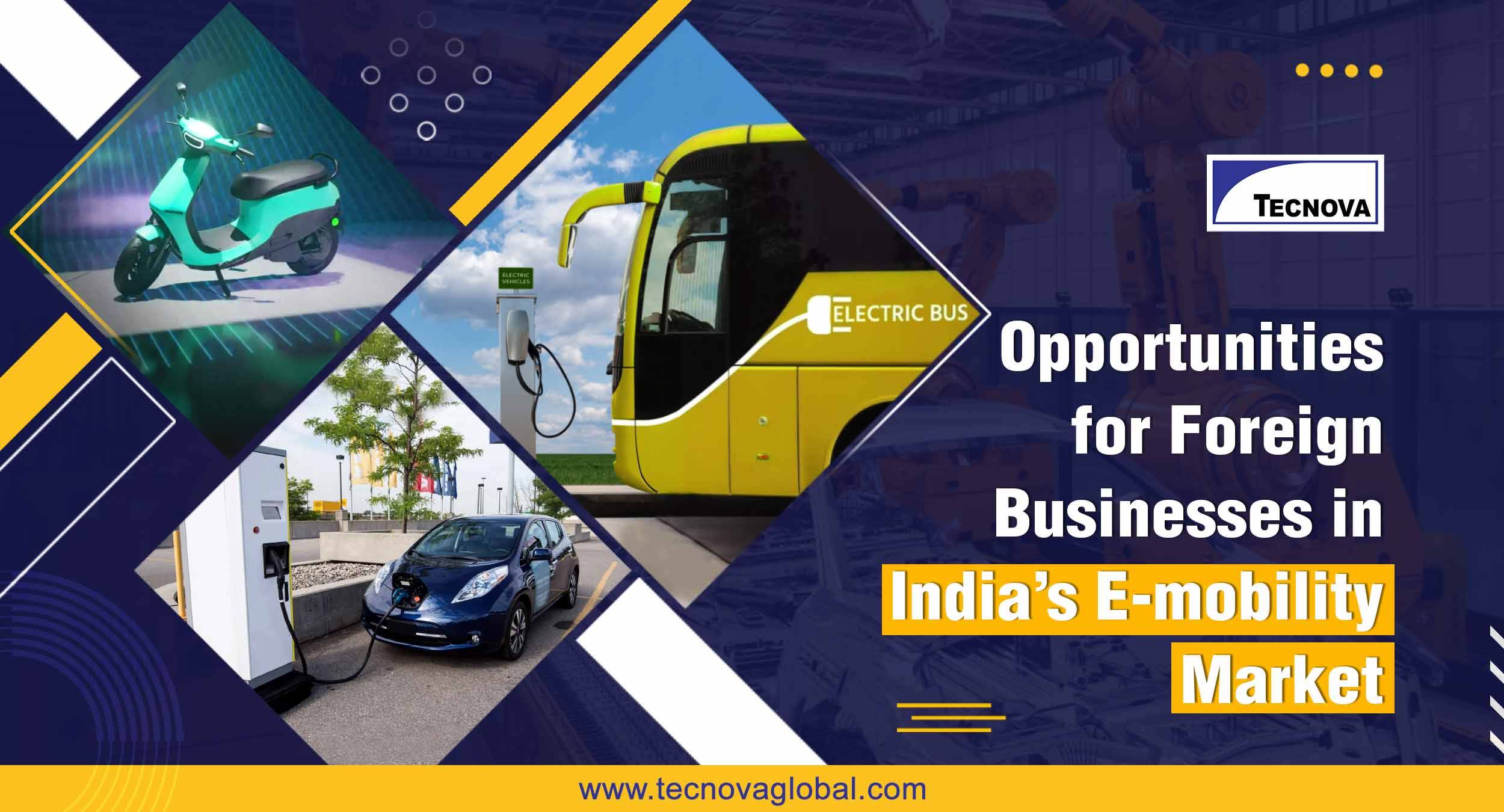
b. PM-eBus Sewa Scheme: Launched in 2023, this scheme aims to deploy over 10,000 electric buses across 14 states and 4 union territories. By July, 2025, over 7,293 e-buses have been sanctioned. Since this scheme increases demand for EVs, it significantly influences the domestic production of components.
In addition to these EV-centric schemes, allowance of 100% FDI through automation and exemption of 100% of customs duties on 25 minerals, including lithium, aid the robust manufacturing growth of auto parts in India.
3. Export‑Friendly Reforms and Trade Facilitation
Signed in 2026, the India-US Trade Deal gives Indian auto parts exporters a massive opportunity to yield revenue. As per the agreement, the domestic auto parts exporters will receive a preferential rate of tariff quota on components that currently fall under the US national security tariffs.
This enables the Indian exporters to access the US market at low-to-no tariffs.
Additionally, the Free Trade Agreement between India and the EU accounts for 11% of global auto components trade, valued at USD 232 billion. Since the EU stands as the largest auto parts export destination for India, Indian and multinational exporters will benefit heavily from the FTA.
As per reports, India exported USD 3.73 billion of auto components to Europe in the first half of FY26, securing a growth of around 11% from USD 3.36 billion in the previous year.
Absolutely! India’s transition toward electric vehicles strongly influences the auto parts manufacturing industry. Though EV adoption is rising, the internal combustion engine (ICE) vehicles still dominate the overall vehicle component manufacturing due to persistent demand.
As per recent data, in January 2026, electric 2-wheeler registration increased by about 26%, while ICE 2-wheeler registration has seen a rise by 40%. The key issues behind this difference are recurrent recovery issues of EV models and frequent ICE new launches.
In spite of the dominance, the EV market in India is expected to reach approximately USD 164.42 billion by 2033 from USD 2.36 billion in 2024, recording an unmatched CAGR of 57.23%.
The market also anticipates selling 10 million EV units by 2030. This shift will expand demand for EV-specific parts such as electric motors, powertrain components, and advanced electronics.

Technology adoption is a critical driver of competitiveness in the Indian auto parts manufacturing sector. Advanced technologies improve production efficiency and quality.
Here’s a detail on how Indian auto parts manufacturers are adapting to tech-led innovation:
1. Automation and Digitisation
Automation and digitisation are transforming factories across India’s auto parts landscape. Robotics and digital quality control systems have improved efficiency and reduced production costs.
More than two-thirds of manufacturing companies have moved beyond pilot projects and are actively implementing digital technologies, such as IoT and AI. This indicates a clear shift towards the Industry 4.0 revolution among Indian auto parts manufacturers.
Over 60% of companies reported that these smart-factory innovations are accelerating transformational benefits, from higher productivity to faster conflict resolution.
2. Global Collaborations and Tech Transfers
Collaborations with global technology partners have helped Indian component makers upgrade capabilities. Many Indian firms now work with international players to adopt advanced manufacturing technologies.
Technology transfers through joint ventures and partnerships have enabled local companies to produce complex parts previously sourced from overseas. These collaborations support the evolution of the auto components industry in India toward higher value-added production.
.jpg)
Despite the manufacturing momentum, the auto parts manufacturing industry in India faces certain challenges like dependency on global supplies, R&D skill gap and infrastructural hurdles. Take a look:
1. Dependence on Global Suppliers
India still depends on imports for certain critical inputs used in advanced components. High-precision machinery and electronic parts are mostly imported.
This dependence exposes the sector to global supply chain disruptions and currency fluctuations. The government must invest in strengthening local production capabilities to reduce this reliance.
2. Need for R&D and Technology Depth
The industry needs integrated research and development centres. Many Indian firms lack the technological depth required for the production of cutting-edge components. R&D reinforcement will enable innovation and help firms compete on global platforms.
3. Infrastructure and Skills Gap
World-class manufacturing requires robust logistics and modern industrial facilities. At the same time, the industry needs skilled technicians and engineers trained in modern technologies. Addressing these gaps through training programs and infrastructural upgrades will help in making India a manufacturing hub by 2033.
The future outlook for the Indian auto parts market through 2033 is highly positive. Projections suggest that the auto parts manufacturing industry in India could grow significantly reaching approximately USD 200 billion by 2030.
India’s cost advantage, talent pool and rising domestic demand will contribute largely to bringing this vision to life. Auto parts exports are expected to reach up to USD 100 billion by 2030. The internal combustion engine (ICE) exports in global markets will rise to a maximum of USD 30 billion, while the domestic EV sales will experience a growth of 35%.
Supported by strong policy and infrastructure improvements, the industry will become a key export hub and a centre of innovation for automotive parts.
Tecnova plays a significant role in helping foreign companies enter the Indian auto parts manufacturing sector growth story with strategic support and collaboration. Take a look at some of our offerings.
1. Market Entry Strategy Support
India is a diverse market. Tecnova assists global firms in understanding the dynamics and regulatory frameworks by facilitating market research, demand forecasting and competitor analysis.
2. Regulatory and Compliance Guidance
Compliance with India’s regulatory environment can be complex. Tecnova guides companies through certification requirements and legal procedures for a smooth market entry and risk reduction.
3. Partnerships and Local Networking
Tecnova connects foreign firms with local partners and industry networks. These connections help foreign companies establish joint ventures and build a reliable local network.
With Tecnova’s support, global auto parts manufacturing giants can enter India and collaborate with local suppliers to optimise manufacturing opportunities and effectively leverage India’s auto parts manufacturing sector growth potential.
Note: For reference, USD 1 equates to ₹90.96.
References:
From Imports to Made-in-India: Why Localising EV Manufacturing is the Key
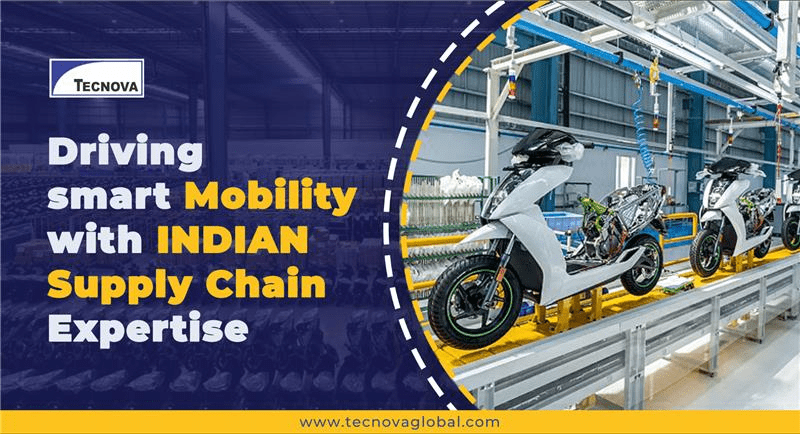
Driving Smart Mobility with Indian Supply Chain Expertise
Tapping into India’s Auto Component Aftermarket Sector
Key Takeaways
➤ The auto parts industry is projected to reach USD 200 billion by 2030.
➤ India’s auto components sector hit USD 78.7 billion in FY25, growing at 14% CAGR.
➤ Auto parts exports reached USD 22.9 billion, boosting India’s global manufacturing status.
➤ Strong governmental policy push (PLI, FAME) is fueling rapid expansion.
➤ The EV market in India is set to surge at 57.23% CAGR by 2033.
How Tecnova Helps?
➤ Builds clear India market entry strategies and simplifies regulatory and compliance processes
➤ Connects foreign auto parts manufacturing firms with trusted local partners to promote collaboration
➤ Provides end-to-end India expansion support
The recent numbers of India’s auto parts manufacturing sector growth strongly affirm that. As per a report published by the Government of India, the industry has secured a turnover of USD 78.74 billion in FY25, growing at 14% CAGR in the last 5 years between 2020 and 2025.
Exports of this sector nearly touched USD 22.9 billion, thanks to the surging vehicle production, aftermarket and OEM incremental sales and persistent policy support. The shift towards e-mobility has also created transformative opportunities for parts manufacturers.
This article unfolds India’s auto components production future and sheds light on the driving forces behind this surge and the challenges that may constrain the growth.
The auto parts manufacturing sector contributed approximately 2.3% of GDP, and it is expected to rise more than 12% in 2026. Certain forces, such as increased demand-based production, post-sale profitability, and export expansion, are driving the growth of the auto components industry in India.
Together, these factors strengthen India’s robust development in manufacturing and deep integration in global supply chains. Let us take a look at these factors in detail:
1. Rising Domestic Vehicle Production
The Indian domestic automobile industry is one of the fastest-growing markets in the world. In FY25, India produced over 3.10 crore commercial vehicles, passenger vehicles, quadricycles, two and three-wheelers.
Currently, the nation stands as the largest producer of 3-wheelers, the 2nd largest manufacturer of 2-wheelers and one of the top 5 producers of commercial and passenger vehicles in the world.
Increased vehicle production directly fuels demand for auto parts. A recent governmental report reveals that the auto components production in India is expected to reach USD 145 billion by 2030 due to increased consumer demand and a focus on producing quality, value-added parts.
2. Strong Aftermarket Growth
The immense automobile and parts production directly drives the aftermarket growth. The auto parts aftermarket segment in India is valued at USD 11.6 billion. In FY25, the domestic supply of aftermarket sales recorded 10% of the industry turnover, while exports reached 19% and this is just the beginning.
In 2025, the Ministry of Heavy Industries introduced the Automotive Mission Plan 2047 (AMP 2047) as a strategic initiative to encourage India's transformation as per the Viksit Bharat 2047 Program.
Since the AMP targets to increase vehicle manufacturing to 50 million by 2030 and 200 million by 2047, the aftermarket segment will also capture a growing share of revenues. It will help India to stabilise demand, especially when new vehicle sales drop.
3. Export Expansion Opportunities
The Indian auto parts market aims to leverage different export expansion opportunities, driven by increased domestic vehicle production. Some of India's major export areas are Europe (USD 6.89 billion), North America (USD 6.19 billion), and Asia (USD 5.15 billion).
The industry generally exports 25% of its manufactured parts every year. However, the numbers are expected to rise as India plans to take advantage of the recent industry trends, ‘China Plus One’ and Global Value Chain (GVC) diversification.
For example, most multinational manufacturers, especially US-based, consider India as a sought-after alternative to maintain manufacturing amidst China’s supply chain disruption and high labour costs. This shift is known as the ‘China Plus One’ trend.
The Global Value Chain (GVC), on the other hand, is a strategic approach to diversifying the supply chain among geographically strategic locations like India and Vietnam to mitigate single-source dependency.
For instance, a major German auto component manufacturer recently established 2 advanced manufacturing units in Morinda, Punjab, in an area of 40,700 sq.m and invested USD 45 million to serve both the domestic and Asian markets proficiently.
Government policy has played an important role in strengthening the auto parts manufacturing industry in India with evolutionary initiatives such as PLI Scheme, Make in India, FAME India Scheme, etc. Subsequently, let us take a close look at them.
1. Make in India and PLI Schemes
The Production Linked Initiative scheme (PLI) is the financial engine of the Make in India initiative. As the Make in India facilitates the auto parts manufacturing ecosystem, the PLI transforms the vision into performance-based incentives on incremental sales.
The budgetary outlay for the automobile and auto parts industry under PLI is approximately USD 3.1 billion.
Under the PLI, the government offers 8% to 13% incentives to Advanced Automotive Technology (AAT) components and 13% to 18% to EVs and Hydrogen Fuel-Cell parts.
2. Policy Support for EV Components
Policy support for EV components relies on 3 primary pillars: driving localisation, supply chain maturity and high-tech manufacturing. Several policies are in action to reinforce the entire supply chain, from raw materials sourcing to complete component manufacturing.
Here are some of them:
a. FAME India Scheme phase-II: While FAME India Scheme I (introduced in 2015) aimed to promote electric vehicle adoption, the FAME India Scheme II (introduced in 2019) stimulates the electrification of public transport. The schemes also proposed the exemption of customs duties on critical minerals imports to boost EV cell components manufacturing.
b. PM-eBus Sewa Scheme: Launched in 2023, this scheme aims to deploy over 10,000 electric buses across 14 states and 4 union territories. By July, 2025, over 7,293 e-buses have been sanctioned. Since this scheme increases demand for EVs, it significantly influences the domestic production of components.
In addition to these EV-centric schemes, allowance of 100% FDI through automation and exemption of 100% of customs duties on 25 minerals, including lithium, aid the robust manufacturing growth of auto parts in India.
3. Export‑Friendly Reforms and Trade Facilitation
Signed in 2026, the India-US Trade Deal gives Indian auto parts exporters a massive opportunity to yield revenue. As per the agreement, the domestic auto parts exporters will receive a preferential rate of tariff quota on components that currently fall under the US national security tariffs.
This enables the Indian exporters to access the US market at low-to-no tariffs.
Additionally, the Free Trade Agreement between India and the EU accounts for 11% of global auto components trade, valued at USD 232 billion. Since the EU stands as the largest auto parts export destination for India, Indian and multinational exporters will benefit heavily from the FTA.
As per reports, India exported USD 3.73 billion of auto components to Europe in the first half of FY26, securing a growth of around 11% from USD 3.36 billion in the previous year.
Absolutely! India’s transition toward electric vehicles strongly influences the auto parts manufacturing industry. Though EV adoption is rising, the internal combustion engine (ICE) vehicles still dominate the overall vehicle component manufacturing due to persistent demand.
As per recent data, in January 2026, electric 2-wheeler registration increased by about 26%, while ICE 2-wheeler registration has seen a rise by 40%. The key issues behind this difference are recurrent recovery issues of EV models and frequent ICE new launches.
In spite of the dominance, the EV market in India is expected to reach approximately USD 164.42 billion by 2033 from USD 2.36 billion in 2024, recording an unmatched CAGR of 57.23%.
The market also anticipates selling 10 million EV units by 2030. This shift will expand demand for EV-specific parts such as electric motors, powertrain components, and advanced electronics.
Technology adoption is a critical driver of competitiveness in the Indian auto parts manufacturing sector. Advanced technologies improve production efficiency and quality.
Here’s a detail on how Indian auto parts manufacturers are adapting to tech-led innovation:
1. Automation and Digitisation
Automation and digitisation are transforming factories across India’s auto parts landscape. Robotics and digital quality control systems have improved efficiency and reduced production costs.
More than two-thirds of manufacturing companies have moved beyond pilot projects and are actively implementing digital technologies, such as IoT and AI. This indicates a clear shift towards the Industry 4.0 revolution among Indian auto parts manufacturers.
Over 60% of companies reported that these smart-factory innovations are accelerating transformational benefits, from higher productivity to faster conflict resolution.
2. Global Collaborations and Tech Transfers
Collaborations with global technology partners have helped Indian component makers upgrade capabilities. Many Indian firms now work with international players to adopt advanced manufacturing technologies.
Technology transfers through joint ventures and partnerships have enabled local companies to produce complex parts previously sourced from overseas. These collaborations support the evolution of the auto components industry in India toward higher value-added production.
Despite the manufacturing momentum, the auto parts manufacturing industry in India faces certain challenges like dependency on global supplies, R&D skill gap and infrastructural hurdles. Take a look:
1. Dependence on Global Suppliers
India still depends on imports for certain critical inputs used in advanced components. High-precision machinery and electronic parts are mostly imported.
This dependence exposes the sector to global supply chain disruptions and currency fluctuations. The government must invest in strengthening local production capabilities to reduce this reliance.
2. Need for R&D and Technology Depth
The industry needs integrated research and development centres. Many Indian firms lack the technological depth required for the production of cutting-edge components. R&D reinforcement will enable innovation and help firms compete on global platforms.
3. Infrastructure and Skills Gap
World-class manufacturing requires robust logistics and modern industrial facilities. At the same time, the industry needs skilled technicians and engineers trained in modern technologies. Addressing these gaps through training programs and infrastructural upgrades will help in making India a manufacturing hub by 2033.
The future outlook for the Indian auto parts market through 2033 is highly positive. Projections suggest that the auto parts manufacturing industry in India could grow significantly reaching approximately USD 200 billion by 2030.
India’s cost advantage, talent pool and rising domestic demand will contribute largely to bringing this vision to life. Auto parts exports are expected to reach up to USD 100 billion by 2030. The internal combustion engine (ICE) exports in global markets will rise to a maximum of USD 30 billion, while the domestic EV sales will experience a growth of 35%.
Supported by strong policy and infrastructure improvements, the industry will become a key export hub and a centre of innovation for automotive parts.
Tecnova plays a significant role in helping foreign companies enter the Indian auto parts manufacturing sector growth story with strategic support and collaboration. Take a look at some of our offerings.
1. Market Entry Strategy Support
India is a diverse market. Tecnova assists global firms in understanding the dynamics and regulatory frameworks by facilitating market research, demand forecasting and competitor analysis.
2. Regulatory and Compliance Guidance
Compliance with India’s regulatory environment can be complex. Tecnova guides companies through certification requirements and legal procedures for a smooth market entry and risk reduction.
3. Partnerships and Local Networking
Tecnova connects foreign firms with local partners and industry networks. These connections help foreign companies establish joint ventures and build a reliable local network.
With Tecnova’s support, global auto parts manufacturing giants can enter India and collaborate with local suppliers to optimise manufacturing opportunities and effectively leverage India’s auto parts manufacturing sector growth potential.
Note: For reference, USD 1 equates to ₹90.96.
References:
From Imports to Made-in-India: Why Localising EV Manufacturing is the Key
Driving Smart Mobility with Indian Supply Chain Expertise
Tapping into India’s Auto Component Aftermarket Sector
















%20(1).png)

.jpg)
.png)


%20(1).png)
.jpg)


.png)



.jpeg)










.png)

.png)







.jpg)




.jpg)


.jpg)