Services


Sectors
Insights
COMMERCIALIZATION
Insights







Follow Us
Key Takeaways
• India is rapidly emerging as a strategic alternative to China in global sourcing.
• Strong infrastructure and digital integration are accelerating India’s export growth.
• The young and skilled workforce strengthens India’s global business standard.
• Competitive costs with quality compliance make India a valuable sourcing hub.
How Tecnova Helps?
• Identifies reliable and compliant suppliers aligning with global quality standards.
• Simplifies market entry and expansion strategies for foreign companies in India.
• Streamlines logistics and cross-border sourcing for timely delivery.
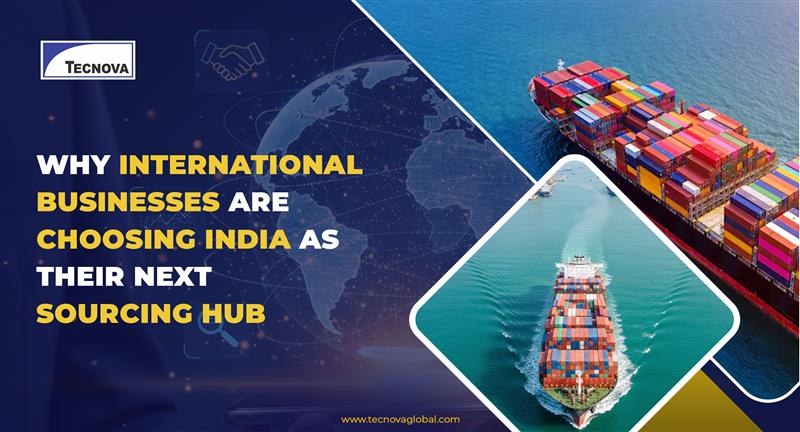
In 2026, the narrative of global sourcing is slowly shifting. Once heavily reliant on China, global procurement firms are turning to diverse and strategic frameworks, like India, to reduce sourcing costs and strengthen supply chain resilience.
Facilitated by a skilled workforce, competitive manufacturing cost, digitalisation and collaborative trade deals, India has evolved from a low-cost alternative to a global trade powerhouse.
In the first 3 quarters of FY 2025-26, the cumulative exports of India reached USD 634.26 billion, showcasing the nation’s deep integration into global supply chains.
But what exactly is driving this momentum of global sourcing in India? Scroll down to explore in detail.
India’s position on the global trading and sourcing map has changed drastically over the last decade. In 2014, India was the 10th largest economy with a GDP of USD 2 trillion. As per the recent economic assessment, the nation is poised to become the 3rd largest economy with an expected GDP of USD 7.3 trillion.
This reflects a significant rise of nearly USD 5 trillion within a span of 13 years. Additionally, the share of international merchandise exports doubled between 2005 and 2024, growing from 1% to 1.8%.
Global surveys are also reinforcing this surge. A survey including 1,200 corporate executives from 17 different countries reveals that 47% of global firms consider India as the key sourcing destination. Meanwhile, 41% prefer the nation as a manufacturing base, 48% affirm in making India an exporting hub.
All these numbers showcase India’s growing significance as a trade leader and its stance as the next-gen sourcing solution.
India has a unique combination of a rising economy, a fair share of English-speaking population, a wealth of raw materials and a competitive geographical advantage. All of these strategic assets make India an ideal place to do business.
Let us take a look at how these factors contribute to global sourcing in India:
1. Strong Manufacturing Infrastructure
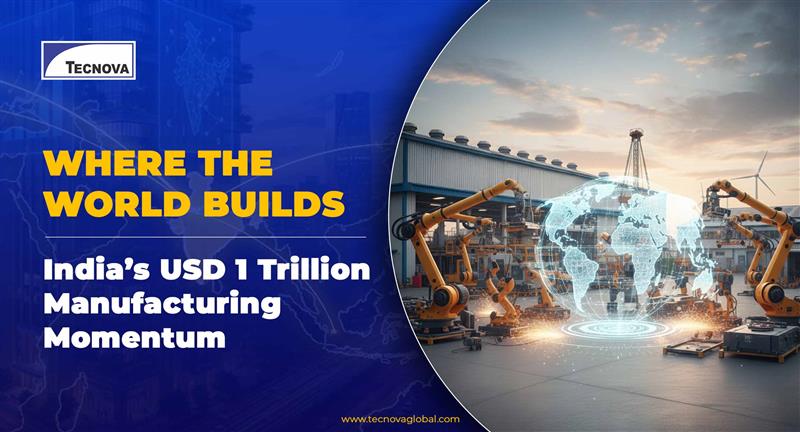
Every great economy has a central pillar, and for India, manufacturing is the one. Thanks to Dedicated Freight Corridors and multimodal logistics improvement like the Unified Logistics Interface Platform, the manufacturing ecosystem in India is flourishing rapidly, projected to touch USD 1 trillion in FY 2026.
These initiatives not only boost efficiency in manufacturing and processing but also reduce lead times, enabling fast delivery. Timely production and shipment meet domestic demand while strengthening the position of India in global supply chains.
2. Collaborative Partnership with Global Giants
FDI in India has seen a noticeable rise of 20 times from FY 2001 to FY 2025, recording an inflow of USD 64.7 billion between April and November in 2025. India also attracts investment from global firms.
For example, a leading electronics contract manufacturer and one of the global sourcing companies is anticipated to invest over USD 1.5 billion to expand its unit. This signals the emergence of India as a strategic manufacturing alternative to reduce reliance on China amidst tariff hits.
3. Digital Backbone
The digital infrastructure adds transparency and efficiency to global sourcing in India. The nation has a total of 958 million active internet users, with over 57% from rural regions. The surging digital adoption aids in supply chain traceability and logistics optimisation.
Platforms like Government e-Marketplace (GeM) processed approximately USD 5.5 billion GMV in FY 2024-25, especially from MSMEs and women-led enterprises. This milestone highlights the role of digital connectivity in enabling sourcing from small and medium businesses.
4. Young and Skilled Workforce
India has always been a nation with a demographic advantage. With a median age of 28.4 years and the largest youth population in the world, the country has a vibrant and growing labour force.
India also produces millions of skilled graduates annually, particularly in STEM. By 2027, the nation will have approximately 18 million STEM graduates. This well-educated and English-proficient workforce facilitates seamless communication in global business environments.
5. Compliance and Cost Efficiency
The labour and production costs in India are comparatively lower than in other sourcing hubs. For example, the minimum per-day wage of Indian labourers is around USD 2.16, which is substantially low when compared to China, Thailand, Indonesia, and Vietnam.
Despite the reduced pricing, Indian suppliers comply with international quality standards such as ISO, CE and GMP, producing merchandise that meets global expectations.
6. Abundance of Raw Materials
India holds an extensive range of natural resources, minerals and other raw materials. The easy availability improves production, contributing to the nation’s sourcing surge.
India is a major producer of cotton, silk and jute, essentials of the textile industry. The accessibility of raw material led the industry to export USD 9.40 billion in April - June FY 2025-26.
7. Governmental Push and Policy Incentive
Government policy and renovation play a crucial role in India’s sourcing supremacy. Production-Linked Incentive (PLI) schemes across various sectors have helped to attract investments and expand export capacity.
For example, PLI and Make-in-India initiatives have increased India's mobile manufacturing capacity from 2 units in 2014 to more than 300 units in 2025. Estimates indicate India’s electronic production will touch USD 300 billion in 2026.
8. Cultural and Geographic Advantage
India’s strategic location at the heart of the Indian Ocean bridge East and West Asia, two giant global markets. The long coastline makes the nation an ideal hub for marine trade.
Plus, the predominantly English-speaking, multilingual workforce reduces communication friction, creating long-standing examples of global economic and commercial sourcing.
9. India’s ESG Transformation
As sustainability shapes sourcing decisions across the world, India stands as one of the world’s largest producers of renewable energy.
Many Indian manufacturers are integrating ESG standards into production to reduce carbon emissions and establish ethical labour practices. These reforms help to align nationwide supply chains with global sustainability norms.

Now that you know why companies source from India, let’s make it easy to enter and expand in India.
Meet Tecnova, your strategic growth partner that turns India’s dynamic and diverse market into a powerhouse of profitable opportunities. We help global procurement firms through:
• Quality and Compliance Assurance: We ensure Indian suppliers meet global standards and expectations.
• Logistics and Delivery Support: Tecnova streamlines complex logistical processes for on-time delivery and seamless cross-border sourcing.
• Market Intelligence: Tecnova provides advisory support on price trends and risk assessment to help you make smart procurement decisions.
%20(1).png)
As global companies look beyond China, India stands out as a cost-efficient and future-ready partner for sustainable global trade. With Tecnova data-driven insights, firms can minimise operational risks and unlock great profit through global sourcing in India.
Note: For reference, USD 1 = INR 90.96

Key Takeaways
• India is rapidly emerging as a strategic alternative to China in global sourcing.
• Strong infrastructure and digital integration are accelerating India’s export growth.
• The young and skilled workforce strengthens India’s global business standard.
• Competitive costs with quality compliance make India a valuable sourcing hub.
How Tecnova Helps?
• Identifies reliable and compliant suppliers aligning with global quality standards.
• Simplifies market entry and expansion strategies for foreign companies in India.
• Streamlines logistics and cross-border sourcing for timely delivery.
In 2026, the narrative of global sourcing is slowly shifting. Once heavily reliant on China, global procurement firms are turning to diverse and strategic frameworks, like India, to reduce sourcing costs and strengthen supply chain resilience.
Facilitated by a skilled workforce, competitive manufacturing cost, digitalisation and collaborative trade deals, India has evolved from a low-cost alternative to a global trade powerhouse.
In the first 3 quarters of FY 2025-26, the cumulative exports of India reached USD 634.26 billion, showcasing the nation’s deep integration into global supply chains.
But what exactly is driving this momentum of global sourcing in India? Scroll down to explore in detail.
India’s position on the global trading and sourcing map has changed drastically over the last decade. In 2014, India was the 10th largest economy with a GDP of USD 2 trillion. As per the recent economic assessment, the nation is poised to become the 3rd largest economy with an expected GDP of USD 7.3 trillion.
This reflects a significant rise of nearly USD 5 trillion within a span of 13 years. Additionally, the share of international merchandise exports doubled between 2005 and 2024, growing from 1% to 1.8%.
Global surveys are also reinforcing this surge. A survey including 1,200 corporate executives from 17 different countries reveals that 47% of global firms consider India as the key sourcing destination. Meanwhile, 41% prefer the nation as a manufacturing base, 48% affirm in making India an exporting hub.
All these numbers showcase India’s growing significance as a trade leader and its stance as the next-gen sourcing solution.
India has a unique combination of a rising economy, a fair share of English-speaking population, a wealth of raw materials and a competitive geographical advantage. All of these strategic assets make India an ideal place to do business.
Let us take a look at how these factors contribute to global sourcing in India:
1. Strong Manufacturing Infrastructure
Every great economy has a central pillar, and for India, manufacturing is the one. Thanks to Dedicated Freight Corridors and multimodal logistics improvement like the Unified Logistics Interface Platform, the manufacturing ecosystem in India is flourishing rapidly, projected to touch USD 1 trillion in FY 2026.
These initiatives not only boost efficiency in manufacturing and processing but also reduce lead times, enabling fast delivery. Timely production and shipment meet domestic demand while strengthening the position of India in global supply chains.
2. Collaborative Partnership with Global Giants
FDI in India has seen a noticeable rise of 20 times from FY 2001 to FY 2025, recording an inflow of USD 64.7 billion between April and November in 2025. India also attracts investment from global firms.
For example, a leading electronics contract manufacturer and one of the global sourcing companies is anticipated to invest over USD 1.5 billion to expand its unit. This signals the emergence of India as a strategic manufacturing alternative to reduce reliance on China amidst tariff hits.
3. Digital Backbone
The digital infrastructure adds transparency and efficiency to global sourcing in India. The nation has a total of 958 million active internet users, with over 57% from rural regions. The surging digital adoption aids in supply chain traceability and logistics optimisation.
Platforms like Government e-Marketplace (GeM) processed approximately USD 5.5 billion GMV in FY 2024-25, especially from MSMEs and women-led enterprises. This milestone highlights the role of digital connectivity in enabling sourcing from small and medium businesses.
4. Young and Skilled Workforce
India has always been a nation with a demographic advantage. With a median age of 28.4 years and the largest youth population in the world, the country has a vibrant and growing labour force.
India also produces millions of skilled graduates annually, particularly in STEM. By 2027, the nation will have approximately 18 million STEM graduates. This well-educated and English-proficient workforce facilitates seamless communication in global business environments.
5. Compliance and Cost Efficiency
The labour and production costs in India are comparatively lower than in other sourcing hubs. For example, the minimum per-day wage of Indian labourers is around USD 2.16, which is substantially low when compared to China, Thailand, Indonesia, and Vietnam.
Despite the reduced pricing, Indian suppliers comply with international quality standards such as ISO, CE and GMP, producing merchandise that meets global expectations.
6. Abundance of Raw Materials
India holds an extensive range of natural resources, minerals and other raw materials. The easy availability improves production, contributing to the nation’s sourcing surge.
India is a major producer of cotton, silk and jute, essentials of the textile industry. The accessibility of raw material led the industry to export USD 9.40 billion in April - June FY 2025-26.
7. Governmental Push and Policy Incentive
Government policy and renovation play a crucial role in India’s sourcing supremacy. Production-Linked Incentive (PLI) schemes across various sectors have helped to attract investments and expand export capacity.
For example, PLI and Make-in-India initiatives have increased India's mobile manufacturing capacity from 2 units in 2014 to more than 300 units in 2025. Estimates indicate India’s electronic production will touch USD 300 billion in 2026.
8. Cultural and Geographic Advantage
India’s strategic location at the heart of the Indian Ocean bridge East and West Asia, two giant global markets. The long coastline makes the nation an ideal hub for marine trade.
Plus, the predominantly English-speaking, multilingual workforce reduces communication friction, creating long-standing examples of global economic and commercial sourcing.
9. India’s ESG Transformation
As sustainability shapes sourcing decisions across the world, India stands as one of the world’s largest producers of renewable energy.
Many Indian manufacturers are integrating ESG standards into production to reduce carbon emissions and establish ethical labour practices. These reforms help to align nationwide supply chains with global sustainability norms.
Now that you know why companies source from India, let’s make it easy to enter and expand in India.
Meet Tecnova, your strategic growth partner that turns India’s dynamic and diverse market into a powerhouse of profitable opportunities. We help global procurement firms through:
• Quality and Compliance Assurance: We ensure Indian suppliers meet global standards and expectations.
• Logistics and Delivery Support: Tecnova streamlines complex logistical processes for on-time delivery and seamless cross-border sourcing.
• Market Intelligence: Tecnova provides advisory support on price trends and risk assessment to help you make smart procurement decisions.
As global companies look beyond China, India stands out as a cost-efficient and future-ready partner for sustainable global trade. With Tecnova data-driven insights, firms can minimise operational risks and unlock great profit through global sourcing in India.
Note: For reference, USD 1 = INR 90.96















%20(1).png)

.jpg)
.png)


%20(1).png)
.jpg)


.png)



.jpeg)













.png)

.png)








.jpg)




.jpg)

.jpg)