Services


Sectors
Insights
COMMERCIALIZATION
Insights







Follow Us
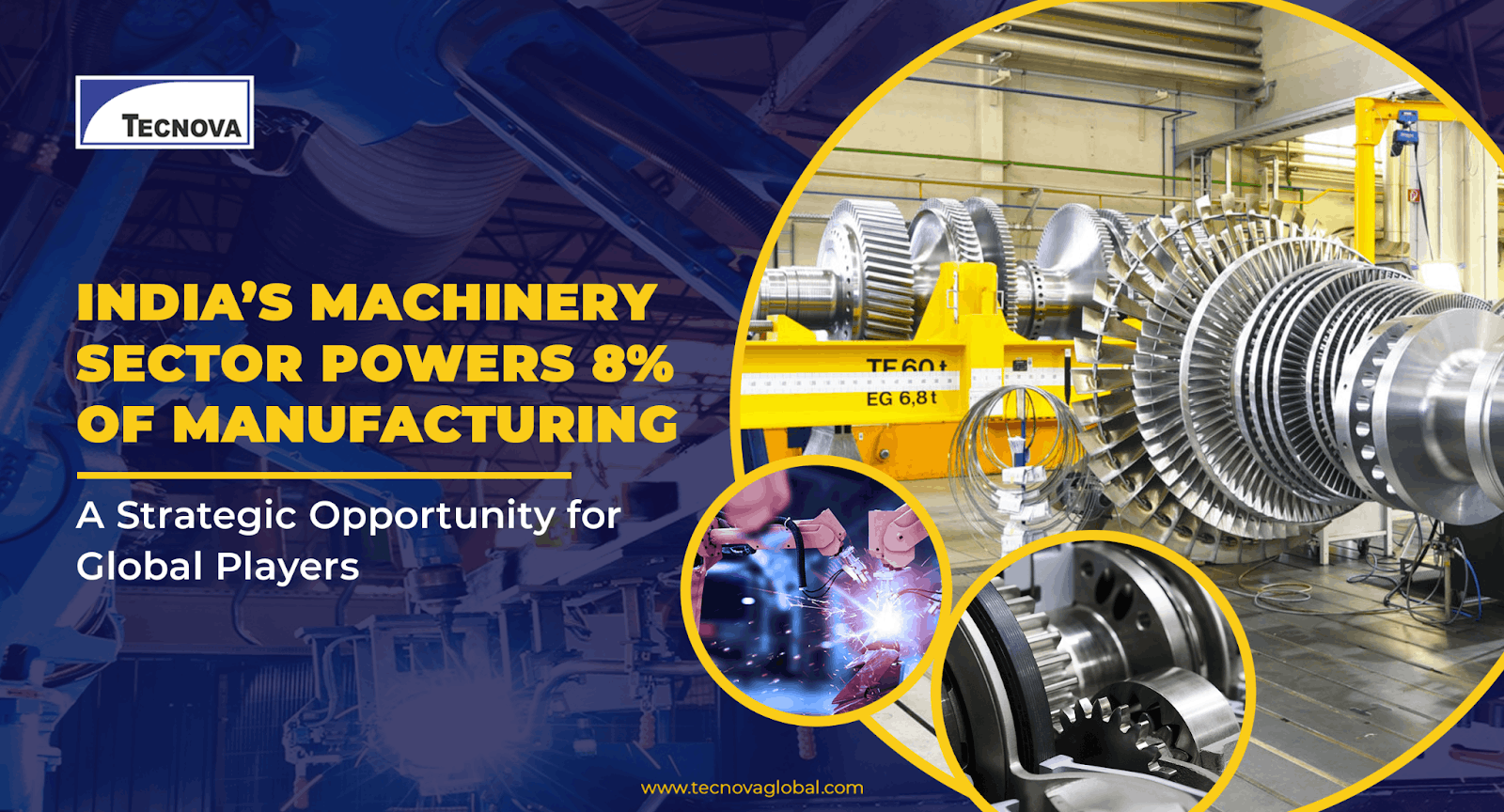
Machinery and Equipment Industry in India: Market Growth, Key Opportunities and Entry Strategy for Foreign Companies
Key Takeaways
➤ India’s machinery sector is evolving from a cost-driven base to a strategic global manufacturing hub.
➤ The sector contributes 8% to manufacturing value and 1.5% to the national GDP.
➤ Semiconductor incentives of USD 17.57 billion are driving demand for precision machinery and automation.
➤ EV market growth to USD 164.42 billion by 2033 is boosting demand for specialised assembly and battery equipment.
Tecnova’s Role in India Market Entry for Machinery Players
➤ Provides end-to-end market entry support, including competition analysis and practical roadmaps.
➤ Designs efficient distribution and supply chain systems while providing risk mitigation strategies.
➤ Manages licensing, regulatory approvals and partner identification across organised and unorganised segments.
Is India becoming the world’s next global machinery powerhouse?
The answer increasingly appears to be yes. The machinery and equipment industry in India has moved from being a cost-driven manufacturing base to a strategic growth engine for global producers.
Recent government data underscores the scale and momentum of this transformation. The machinery and equipment sector now contributes nearly 8% of India’s total manufacturing value and around 1.5% to the national GDP.
India’s combination of domestic demand, policy reform, and infrastructure expansion has created a compelling market for industrial machinery in India. For foreign manufacturers, this presents a strategic opportunity, provided entry is backed by careful planning and execution.
India’s capital goods sector is one of the fastest-growing components of its manufacturing economy. As per recent government reports, the capital goods industry accounts for approximately 12% of India’s total manufacturing output.
The sector is expected to reach USD 3.51 billion by 2034, supported by consistent public capital expenditure and private manufacturing investments.
India is positioned among the top three global manufacturing destinations for diversification beyond traditional Asian hubs. This repositioning directly strengthens equipment manufacturing in India, especially in precision engineering and heavy machinery.
Additionally, India’s 100% FDI allowance under the automatic route for most manufacturing segments further improves the investment climate.
.jpg)
Several long-term shifts are coming together to increase demand for industrial machinery and equipment across India. For foreign companies planning to enter the market, understanding these growth drivers is important to shape a practical and well-timed entry strategy.
• Semiconductor Assembly
India has launched multiple semiconductor manufacturing incentives under the Semicon India Program. As per recent government reports, over USD 17.57 billion in semiconductor-related proposals have been approved.
Semiconductor assembly and testing units require highly specialised precision machinery, cleanroom equipment and automation systems. This creates long-term demand for advanced industrial equipment manufacturing in India.
With electronics production projected to exceed USD 300 billion by 2026, machinery suppliers aligned with semiconductor value chains stand to benefit significantly.
• EV Manufacturing
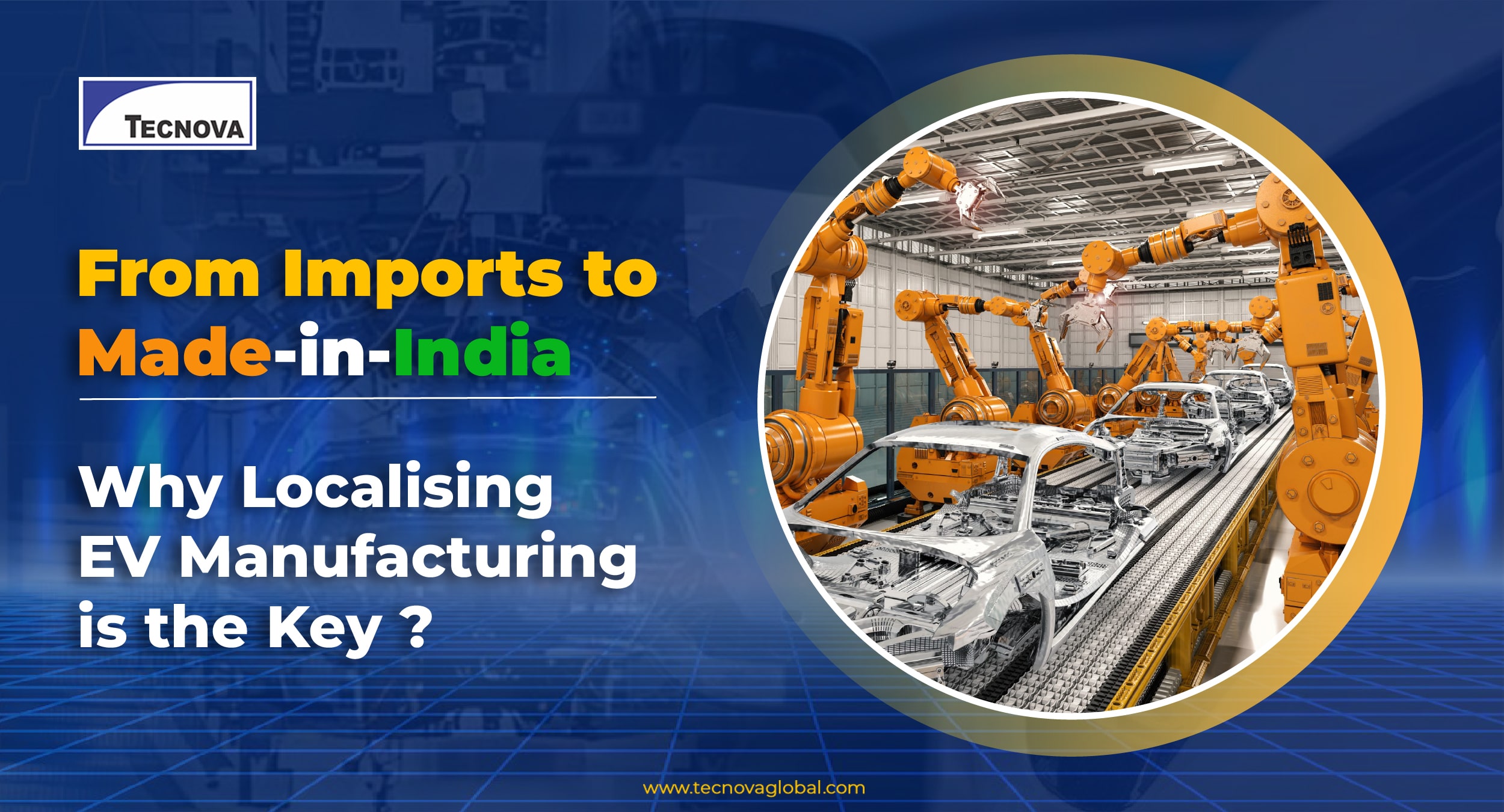
India aims to achieve 30% electric vehicle penetration in private vehicles and 70% in commercial segments by 2030. For this, the production requires specialised assembly lines, battery pack manufacturing systems, robotics integration and testing equipment.
As per recent reports, the EV market could reach USD 164.42 billion by 2033, with a remarkable CAGR of 57.23%.
This shift has accelerated demand for heavy equipment in India and automated manufacturing solutions tailored to battery and power electronics.
• Industrial Automation
Automation adoption in Indian manufacturing is accelerating. According to recent industry projections, the country’s industrial robotics market is set to expand at a CAGR of 15.87% between 2026 and 2034.
Smart factories, Industry 4.0 systems and predictive maintenance platforms are pushing machinery suppliers to integrate AI-enabled controls and IoT-enabled monitoring.
Automation is no longer optional. It is central to productivity and competitiveness within the Indian machinery industry.
• Engineering Tools
India’s engineering exports crossed USD 100 billion recently this year. Aerospace, defence, and auto sectors are key enablers of this export momentum.
.jpg)
While opportunities are strong, foreign entrants must understand the practical realities of operating in India.
1. Complex and Evolving Regulatory Environment
India’s regulatory landscape has improved significantly, yet sector-specific approvals, environmental clearances, and compliance filings require careful management. Recent policy reforms have streamlined licensing, but interpretation and execution still demand local expertise.
2. Need for Reliable Local Partners
India’s market diversity makes regional partnerships critical. Distribution networks, vendor ecosystems, and government relationships vary by state. Foreign machinery manufacturers often struggle without structured partner due diligence and operational alignment.
3. Slow and Fragmented Banking Processes
While digital banking reforms have significantly enhanced transparency and efficiency, transaction processes and documentation standards can still vary. That said, proactive financial planning and well-organised compliance play a critical role in minimising delays and ensuring smoother approvals.
4. Navigating India’s Multi-Layered Tax System
India’s indirect tax framework has been simplified, yet sector-specific customs duties and evolving tariff structures require continuous monitoring. Recent customs duty rationalisation on select capital goods has improved cost competitiveness for foreign manufacturers entering the industrial machinery in India.
1. Government Programs & Incentives
India offers production-linked incentives, state-level manufacturing subsidies and infrastructure-linked incentives across sectors, including electronics, automotive and renewable energy.
For instance, the government has committed USD 3.53 billion to strengthen India’s manufacturing ecosystem, with a strong focus on the automotive and drone sectors.
Aligning product portfolios with policy-backed sectors enhances profitability and reduces risk.
2. Legal, Cultural & Operational Adaptation
Foreign companies must adapt pricing models, localisation strategies, vendor sourcing and workforce management to Indian conditions.
Operational resilience often depends on phased entry. It begins with market validation, followed by entity setup, and eventually local manufacturing or assembly.
%20(1).png)
Entering the machinery and equipment industry in India requires more than opportunity assessment. It demands structured execution, risk mitigation and continuous adaptation.
At Tecnova, we support foreign machinery manufacturers through a comprehensive and research-driven approach.
• Market Entry Strategy:- We help companies understand how the Indian market works by analysing competition, identifying the right sales channels and building a practical entry roadmap.
• Compliance and Local Support:- We assist with licensing, regulatory approvals and documentation so businesses remain fully compliant from day one.
• Partner Identification:- We find reliable partners across both organised and unorganised segments to ensure smooth market expansion.
• Logistics and Supply Chain Support:- We help set up efficient distribution and supply chain systems to control costs and ensure timely product availability across markets.
• Risk Mitigation:- We help identify possible risks early and provide clear strategies to reduce them. We ensure a safer and more profitable market entry.
Tecnova combines policy understanding, sectoral expertise and execution capability. This enables global machinery companies to transition from feasibility evaluation to profitable scale with confidence.
Note: For reference, USD 1 equates to INR 90.96.
References:
Planning India Entry? Check BIS Compliance for Heavy Industries
Where the World Builds: India’s USD 1 Trillion Manufacturing Momentum
Why Global Companies Need Manufacturing Consulting Firms in India
Machinery and Equipment Industry in India: Market Growth, Key Opportunities and Entry Strategy for Foreign Companies
Key Takeaways
➤ India’s machinery sector is evolving from a cost-driven base to a strategic global manufacturing hub.
➤ The sector contributes 8% to manufacturing value and 1.5% to the national GDP.
➤ Semiconductor incentives of USD 17.57 billion are driving demand for precision machinery and automation.
➤ EV market growth to USD 164.42 billion by 2033 is boosting demand for specialised assembly and battery equipment.
Tecnova’s Role in India Market Entry for Machinery Players
➤ Provides end-to-end market entry support, including competition analysis and practical roadmaps.
➤ Designs efficient distribution and supply chain systems while providing risk mitigation strategies.
➤ Manages licensing, regulatory approvals and partner identification across organised and unorganised segments.
Is India becoming the world’s next global machinery powerhouse?
The answer increasingly appears to be yes. The machinery and equipment industry in India has moved from being a cost-driven manufacturing base to a strategic growth engine for global producers.
Recent government data underscores the scale and momentum of this transformation. The machinery and equipment sector now contributes nearly 8% of India’s total manufacturing value and around 1.5% to the national GDP.
India’s combination of domestic demand, policy reform, and infrastructure expansion has created a compelling market for industrial machinery in India. For foreign manufacturers, this presents a strategic opportunity, provided entry is backed by careful planning and execution.
India’s capital goods sector is one of the fastest-growing components of its manufacturing economy. As per recent government reports, the capital goods industry accounts for approximately 12% of India’s total manufacturing output.
The sector is expected to reach USD 3.51 billion by 2034, supported by consistent public capital expenditure and private manufacturing investments.
India is positioned among the top three global manufacturing destinations for diversification beyond traditional Asian hubs. This repositioning directly strengthens equipment manufacturing in India, especially in precision engineering and heavy machinery.
Additionally, India’s 100% FDI allowance under the automatic route for most manufacturing segments further improves the investment climate.
Several long-term shifts are coming together to increase demand for industrial machinery and equipment across India. For foreign companies planning to enter the market, understanding these growth drivers is important to shape a practical and well-timed entry strategy.
• Semiconductor Assembly
India has launched multiple semiconductor manufacturing incentives under the Semicon India Program. As per recent government reports, over USD 17.57 billion in semiconductor-related proposals have been approved.
Semiconductor assembly and testing units require highly specialised precision machinery, cleanroom equipment and automation systems. This creates long-term demand for advanced industrial equipment manufacturing in India.
With electronics production projected to exceed USD 300 billion by 2026, machinery suppliers aligned with semiconductor value chains stand to benefit significantly.
• EV Manufacturing
India aims to achieve 30% electric vehicle penetration in private vehicles and 70% in commercial segments by 2030. For this, the production requires specialised assembly lines, battery pack manufacturing systems, robotics integration and testing equipment.
As per recent reports, the EV market could reach USD 164.42 billion by 2033, with a remarkable CAGR of 57.23%.
This shift has accelerated demand for heavy equipment in India and automated manufacturing solutions tailored to battery and power electronics.
• Industrial Automation
Automation adoption in Indian manufacturing is accelerating. According to recent industry projections, the country’s industrial robotics market is set to expand at a CAGR of 15.87% between 2026 and 2034.
Smart factories, Industry 4.0 systems and predictive maintenance platforms are pushing machinery suppliers to integrate AI-enabled controls and IoT-enabled monitoring.
Automation is no longer optional. It is central to productivity and competitiveness within the Indian machinery industry.
• Engineering Tools
India’s engineering exports crossed USD 100 billion recently this year. Aerospace, defence, and auto sectors are key enablers of this export momentum.
While opportunities are strong, foreign entrants must understand the practical realities of operating in India.
1. Complex and Evolving Regulatory Environment
India’s regulatory landscape has improved significantly, yet sector-specific approvals, environmental clearances, and compliance filings require careful management. Recent policy reforms have streamlined licensing, but interpretation and execution still demand local expertise.
2. Need for Reliable Local Partners
India’s market diversity makes regional partnerships critical. Distribution networks, vendor ecosystems, and government relationships vary by state. Foreign machinery manufacturers often struggle without structured partner due diligence and operational alignment.
3. Slow and Fragmented Banking Processes
While digital banking reforms have significantly enhanced transparency and efficiency, transaction processes and documentation standards can still vary. That said, proactive financial planning and well-organised compliance play a critical role in minimising delays and ensuring smoother approvals.
4. Navigating India’s Multi-Layered Tax System
India’s indirect tax framework has been simplified, yet sector-specific customs duties and evolving tariff structures require continuous monitoring. Recent customs duty rationalisation on select capital goods has improved cost competitiveness for foreign manufacturers entering the industrial machinery in India.
1. Government Programs & Incentives
India offers production-linked incentives, state-level manufacturing subsidies and infrastructure-linked incentives across sectors, including electronics, automotive and renewable energy.
For instance, the government has committed USD 3.53 billion to strengthen India’s manufacturing ecosystem, with a strong focus on the automotive and drone sectors.
Aligning product portfolios with policy-backed sectors enhances profitability and reduces risk.
2. Legal, Cultural & Operational Adaptation
Foreign companies must adapt pricing models, localisation strategies, vendor sourcing and workforce management to Indian conditions.
Operational resilience often depends on phased entry. It begins with market validation, followed by entity setup, and eventually local manufacturing or assembly.
Entering the machinery and equipment industry in India requires more than opportunity assessment. It demands structured execution, risk mitigation and continuous adaptation.
At Tecnova, we support foreign machinery manufacturers through a comprehensive and research-driven approach.
• Market Entry Strategy:- We help companies understand how the Indian market works by analysing competition, identifying the right sales channels and building a practical entry roadmap.
• Compliance and Local Support:- We assist with licensing, regulatory approvals and documentation so businesses remain fully compliant from day one.
• Partner Identification:- We find reliable partners across both organised and unorganised segments to ensure smooth market expansion.
• Logistics and Supply Chain Support:- We help set up efficient distribution and supply chain systems to control costs and ensure timely product availability across markets.
• Risk Mitigation:- We help identify possible risks early and provide clear strategies to reduce them. We ensure a safer and more profitable market entry.
Tecnova combines policy understanding, sectoral expertise and execution capability. This enables global machinery companies to transition from feasibility evaluation to profitable scale with confidence.
Note: For reference, USD 1 equates to INR 90.96.
References:
Planning India Entry? Check BIS Compliance for Heavy Industries
Where the World Builds: India’s USD 1 Trillion Manufacturing Momentum
Why Global Companies Need Manufacturing Consulting Firms in India













%20(1).png)

.jpg)
.png)


%20(1).png)
.jpg)


.png)


.jpeg)









.png)

.png)





.jpg)




.jpg)
.jpg)