Services


Sectors
Insights
COMMERCIALIZATION
Insights







Follow Us
Location Analysis for Medical Device Manufacturing in India - Identifying the Optimal Manufacturing Hub for Global Medical Device Companies
✧ Why is Location Analysis Important for Medical Device Manufacturing in India?
✧ Why Does Location Analysis for Medical Device Manufacturing in India Start from States?
✧ Decoding State-By-State India's Medical Device Manufacturing Superpower
✧ What are the Compliance Requirements for Setting Up a Plant for Medical Device Manufacturing in India?
✧ What are the Challenges in Setting Up a Medical Device Manufacturing Unit?
✧ How Tecnova can Help Foreign Businesses Set Up a Medical Device Manufacturing Unit in India?
✧ Frequently Asked Questions (FAQ) about Medical Device Manufacturing Location Analysis in India
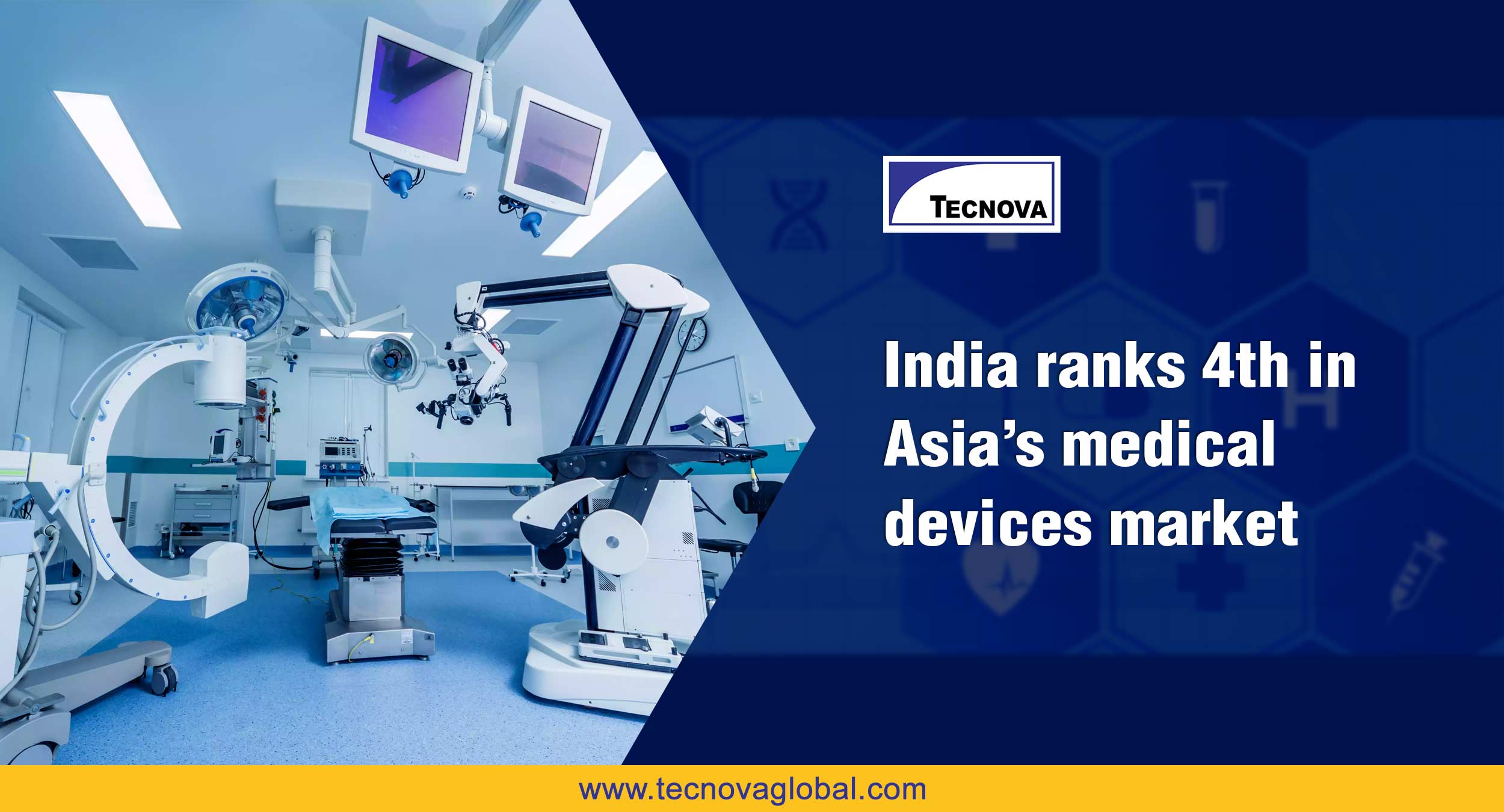
Are you planning to establish a medical device manufacturing business in Asia’s 4th-largest medical devices market?
The medical devices manufacturing market in India is anticipated to reach USD 50.1 billion in 2030 from USD 15.2 billion in 2025. With a sky-scraping CAGR of 26.9%, global companies are increasingly evaluating India as a strategic manufacturing base.
However, choosing the right location for a medical device manufacturing hub in India remains one of the most critical decisions for foreign businesses. Factors such as infrastructure, compliance ecosystem, logistics and talent availability vary significantly across states.
To help businesses make an informed decision, this guide subsequently explores the location dynamics of India.
To establish a medical device manufacturing hub in India, location analysis plays a decisive role. It helps foreign businesses to determine the long-term profitability and operational efficiency of a unit.
India offers a highly diverse industrial landscape, with each state offering distinct advantages. For foreign companies, selecting the right medical device manufacturing hub in India can directly impact:
● Production cost optimisation
● Regulatory approvals and timelines
● Access to ports and export infrastructure
● Supply chain efficiency
● Availability of skilled biomedical engineers and technicians
● Tax and capital subsidies
● Ease of land acquisition
India used to import nearly 70% of its high-end medical devices. However, after the introduction of PLI schemes, India is slowly becoming a self-reliant nation.
By September 2025, the scheme had led to investments of around USD 11.53 million ( INR 1093.69 crore). The country now manufactures 57 high-end medical devices. This creates substantial opportunities for global manufacturers to localise production.
According to the research, the Indian medical devices sector is growing at a CAGR of approximately 15% and it is projected to achieve a global market share of 10% - 12% in the upcoming 20 to 25 years.
The medical technology industry of India is also poised to reach USD 20 billion by 2030, making it one of the fastest-growing segments in the healthcare industry.
In addition to this strong surge, India’s strategic geographic location enables manufacturers to cater not only to the domestic market but also to emerging markets across Southeast Asia, Africa and the Middle East. This is why a comprehensive location analysis is required to help investors identify the best state for medical device manufacturing in India.
India follows a federal structure where state governments play a major role in industrial development, land allocation, labour regulations, electricity tariffs and manufacturing incentives. While the central government establishes broad policies, execution largely depends on state-level industrial authorities.
This is why location analysis for medical device manufacturing in India must begin with evaluating states individually. Different states offer different strengths. State-specific industrial policies can significantly reduce operational costs through:
● Stamp duty exemptions
● Subsidised land
● Electricity incentives
● Skill development support
For example, several Indian states offer dedicated medical device parks with plug-and-play infrastructure, common testing facilities, robust incentive structures and treatment plants, which significantly reduce the upfront investment costs.
Therefore, to successfully determine how to select a medical device manufacturing site, manufacturers must understand state-level industrial ecosystems.
The National Medical Devices Policy, 2023, aims to accelerate domestic manufacturing and reduce import reliance.
To support this policy, the Department of Pharmaceuticals is implementing the Promotion of Medical Devices Parks scheme, which provides financial assistance to states for building world-class common infrastructure facilities.
Let us take a look at the strengths of different states:
Andhra Pradesh
Andhra Pradesh has emerged as a major medical device manufacturing hub in India due to its large-scale industrial infrastructure and proactive government policies.
The Andhra Pradesh MedTech Zone (AMTZ) in Visakhapatnam is India’s first dedicated medical devices manufacturing park. Spread across more than 270 acres, AMTZ includes common scientific facilities such as:
Andhra Pradesh is particularly suitable for:
Karnataka
Karnataka is widely recognised for its technology-driven industrial ecosystem and is often considered among the best states for medical device manufacturing in India for innovation-focused companies.
Bengaluru serves as a major biomedical and medtech innovation hub, supported by:
Karnataka contributes significantly to India’s biotech exports. The bioeconomy of the state reaches USD 39 billion, which contributes 20% of the national bioeconomy.
Additionally, the presence of institutions such as IISc and multiple engineering universities creates access to highly skilled technical manpower. Other key advantages include:
Maharashtra
Maharashtra remains one of India’s most industrialised states and a preferred destination for multinational manufacturers. Cities such as Pune, Mumbai and Nashik provide strong industrial ecosystems supported by:
a. International airports
b. Major seaports
c. Financial institutions
The state contributes nearly 14% of India’s industrial output and hosts several multinational pharmaceutical and healthcare companies. Key advantages include:
Tamil Nadu
Tamil Nadu has established itself as one of India’s leading electronics and precision manufacturing destinations. The state offers:
a. Well-developed industrial corridors
b. Strong automotive and electronics supply chains
c. Skilled labour availability
d. Reliable power infrastructure
Chennai, often called the ‘Detroit of India’, provides advanced engineering capabilities highly relevant for medical device manufacturing. The state’s ports, including Chennai and Ennore, facilitate international trade and reduce export lead times.
Tamil Nadu is particularly suitable for:
a. Electronic medical devices
b. Imaging systems
c. Precision-engineered medical equipment
d. Export-oriented manufacturing
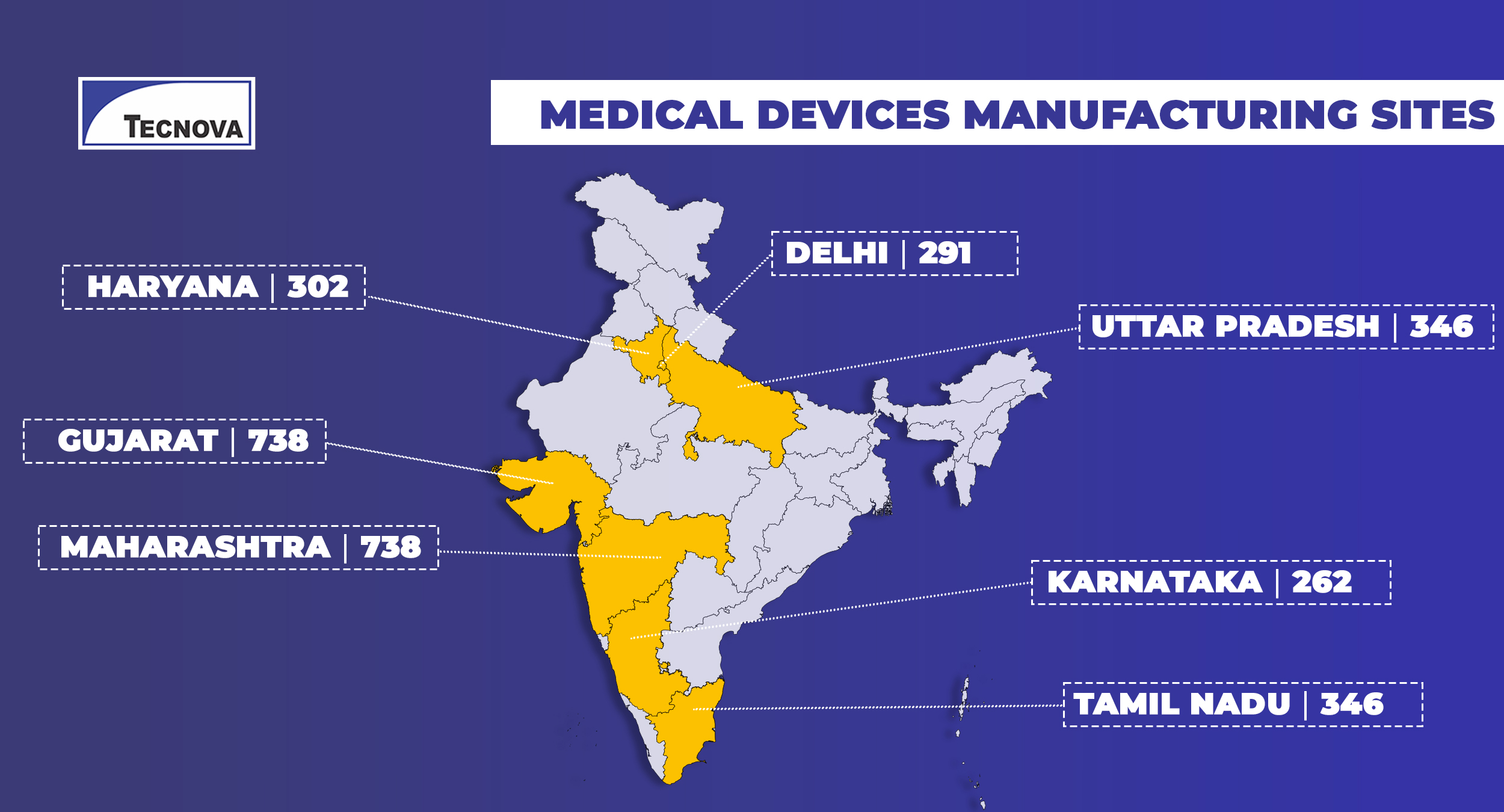
As per a recent survey by the Ministry of Chemicals and Fertilisers, Department of Pharmaceuticals, certain states have the highest number of medical device manufacturing sites, with Gujarat being the highest.
Here are the top 7 states:
Foreign investors must navigate multiple regulatory and compliance requirements before establishing a medical device manufacturing unit in India. Some of the primary compliance requirements include:
Manufacturers must obtain licenses under the Central Drugs Standard Control Organisation (CDSCO). Medical devices are regulated under 2 acts, the Medical Devices Rules, 2017 and the Drugs and Cosmetics Act, 1940.
Compliance with global standards is essential. Every manufacturing hub must possess ISO 13485 certification, Good Manufacturing Practices (GMP), CE marking and US FDA compliance for production and commercial efficiency.
Foreign pharmaceuticals establishing a medical device manufacturing hub in India also need pollution control approvals, factory licenses, fire safety clearances and building permits.
Businesses involved in international trade require an Import Export Code (IEC), customs registrations, and GST registrations.
The government has also introduced the PLI scheme for medical devices in India to boost domestic manufacturing and reduce import dependency. The PLI scheme for pharmaceuticals has a financial outlay of nearly USD 1.8 billion (INR 15,000 crore) during financial years 2022–23 and 2027–28.
Under the Production Linked Incentive (PLI) Scheme:
In addition, the Indian government is promoting dedicated medical device parks to strengthen the manufacturing ecosystem. Several medical device clusters and parks have been developed across states such as Gujarat, Tamil Nadu, Telangana, and Andhra Pradesh, providing manufacturers with access to world-class infrastructure, common testing facilities, specialized supply chains, and a skilled workforce. These parks help reduce operational costs, improve manufacturing efficiency, and accelerate the setup of medical device production facilities.
For foreign manufacturers, establishing operations within or near these medical device hubs can offer significant advantages, including faster market access, better supplier networks, and access to state-specific incentives that complement central government schemes such as the PLI program.
Despite strong growth potential, companies might encounter a few operational and strategic challenges while establishing manufacturing facilities in India. Here are some of them:
India’s regulatory framework can be difficult to navigate for first-time investors, especially due to evolving device classifications and licensing procedures.
Although India has a growing supplier ecosystem, certain high-end components and raw materials still rely heavily on imports.
Industrial infrastructure quality differs significantly across states and districts. Poor site selection may lead to logistics inefficiencies and increased operational costs.
However, all these challenges can easily be sidestepped if foreign companies collaborate with an experienced India entry consulting firm like Tecnova.

With over 40 years of experience supporting international companies in India, Tecnova helps medical device manufacturers navigate every stage of their market entry and expansion journey. Our services include:
As India continues to emerge as a global hub for medical device manufacturing, choosing the right location and partners is critical for long-term success. Tecnova combines local market expertise with global business experience to help foreign companies establish, operate and grow their manufacturing presence in India with confidence.
➣ Which Indian states are best for medical device manufacturing?
India's leading medical device manufacturing destinations include Tamil Nadu (Chennai Medical Device Park), Telangana (Hyderabad MedTech ecosystem), Gujarat (Ahmedabad–Vadodara corridor), Maharashtra (Pune–Mumbai region) and Karnataka (Bengaluru cluster). The ideal location depends on your product category, supplier ecosystem, skilled workforce availability, logistics requirements, regulatory support and export strategy. Global manufacturers should conduct a comprehensive location assessment before finalizing a site.
➣ What factors should global medical device manufacturers consider when selecting a manufacturing location in India?
Key factors include access to component suppliers, skilled engineering talent, regulatory infrastructure, logistics connectivity, industrial land availability, utility reliability, operating costs, medical device parks, government incentives and proximity to export ports and airports. A location strategy should align with both domestic market opportunities and international export objectives.
➣ How do medical device parks influence manufacturing location decisions in India?
Medical device parks provide specialized infrastructure, testing facilities, common sterilization services, regulatory support and cluster-based supplier networks. These parks can significantly reduce setup costs, shorten time-to-market and improve operational efficiency for foreign manufacturers establishing production facilities in India.
➣ Can medical devices manufactured in India be exported to the United States under an existing FDA 510(k) clearance?
Yes. An FDA 510(k) clearance applies to the device itself regardless of manufacturing location, provided the Indian manufacturing facility is properly registered with the U.S. FDA and complies with applicable Quality Management System Regulations (QMSR). Manufacturers should ensure that their Indian production site maintains FDA registration and is prepared for FDA inspections before initiating exports.
➣ How does India's Medical Devices Rules (MDR) 2017 framework compare with global regulations?
India's MDR 2017 framework broadly aligns with internationally recognized regulatory principles covering device classification, quality management systems, risk management, clinical evaluation and post-market surveillance. As a member of the International Medical Device Regulators Forum (IMDRF), India continues to harmonize its regulatory framework with global standards, making it increasingly attractive for international manufacturers.
➣ Which Indian locations offer the strongest medical device supplier ecosystems?
Hyderabad, Chennai, Bengaluru, Pune, Ahmedabad and Delhi-NCR have developed strong ecosystems of precision engineering suppliers, electronics manufacturers, plastics processors, sterilization providers, packaging vendors and testing laboratories. Manufacturers seeking supply chain resilience often prioritize locations with established healthcare and engineering clusters.
➣ What government incentives are available for medical device manufacturing investments in India?
Foreign manufacturers may benefit from central and state-level incentives, including capital subsidies, land rebates, tax benefits, infrastructure support, employment-linked incentives and schemes promoting domestic medical device production. Incentives vary significantly by state, making location selection a critical component of investment planning.
➣ How important is export infrastructure when choosing a medical device manufacturing location in India?
Export infrastructure is a major consideration, particularly for manufacturers serving the U.S., European, Middle Eastern and Asia-Pacific markets. Locations near international airports, container ports, logistics hubs and customs facilities can reduce transit times, improve supply chain reliability and lower transportation costs.
➣ Why is location analysis critical for successful medical device manufacturing in India?
Location decisions directly impact production costs, regulatory compliance, supply chain efficiency, talent acquisition, scalability and export competitiveness. A well-structured location analysis helps manufacturers identify the optimal balance between operational efficiency, market access, regulatory readiness and long-term growth opportunities, ensuring a successful and sustainable manufacturing presence in India.
References
Location Analysis for Medical Device Manufacturing in India - Identifying the Optimal Manufacturing Hub for Global Medical Device Companies
✧ Why is Location Analysis Important for Medical Device Manufacturing in India?
✧ Why Does Location Analysis for Medical Device Manufacturing in India Start from States?
✧ Decoding State-By-State India's Medical Device Manufacturing Superpower
✧ What are the Compliance Requirements for Setting Up a Plant for Medical Device Manufacturing in India?
✧ What are the Challenges in Setting Up a Medical Device Manufacturing Unit?
✧ How Tecnova can Help Foreign Businesses Set Up a Medical Device Manufacturing Unit in India?
✧ Frequently Asked Questions (FAQ) about Medical Device Manufacturing Location Analysis in India
Are you planning to establish a medical device manufacturing business in Asia’s 4th-largest medical devices market?
The medical devices manufacturing market in India is anticipated to reach USD 50.1 billion in 2030 from USD 15.2 billion in 2025. With a sky-scraping CAGR of 26.9%, global companies are increasingly evaluating India as a strategic manufacturing base.
However, choosing the right location for a medical device manufacturing hub in India remains one of the most critical decisions for foreign businesses. Factors such as infrastructure, compliance ecosystem, logistics and talent availability vary significantly across states.
To help businesses make an informed decision, this guide subsequently explores the location dynamics of India.
To establish a medical device manufacturing hub in India, location analysis plays a decisive role. It helps foreign businesses to determine the long-term profitability and operational efficiency of a unit.
India offers a highly diverse industrial landscape, with each state offering distinct advantages. For foreign companies, selecting the right medical device manufacturing hub in India can directly impact:
● Production cost optimisation
● Regulatory approvals and timelines
● Access to ports and export infrastructure
● Supply chain efficiency
● Availability of skilled biomedical engineers and technicians
● Tax and capital subsidies
● Ease of land acquisition
India used to import nearly 70% of its high-end medical devices. However, after the introduction of PLI schemes, India is slowly becoming a self-reliant nation.
By September 2025, the scheme had led to investments of around USD 11.53 million ( INR 1093.69 crore). The country now manufactures 57 high-end medical devices. This creates substantial opportunities for global manufacturers to localise production.
According to the research, the Indian medical devices sector is growing at a CAGR of approximately 15% and it is projected to achieve a global market share of 10% - 12% in the upcoming 20 to 25 years.
The medical technology industry of India is also poised to reach USD 20 billion by 2030, making it one of the fastest-growing segments in the healthcare industry.
In addition to this strong surge, India’s strategic geographic location enables manufacturers to cater not only to the domestic market but also to emerging markets across Southeast Asia, Africa and the Middle East. This is why a comprehensive location analysis is required to help investors identify the best state for medical device manufacturing in India.
India follows a federal structure where state governments play a major role in industrial development, land allocation, labour regulations, electricity tariffs and manufacturing incentives. While the central government establishes broad policies, execution largely depends on state-level industrial authorities.
This is why location analysis for medical device manufacturing in India must begin with evaluating states individually. Different states offer different strengths. State-specific industrial policies can significantly reduce operational costs through:
● Stamp duty exemptions
● Subsidised land
● Electricity incentives
● Skill development support
For example, several Indian states offer dedicated medical device parks with plug-and-play infrastructure, common testing facilities, robust incentive structures and treatment plants, which significantly reduce the upfront investment costs.
Therefore, to successfully determine how to select a medical device manufacturing site, manufacturers must understand state-level industrial ecosystems.
The National Medical Devices Policy, 2023, aims to accelerate domestic manufacturing and reduce import reliance.
To support this policy, the Department of Pharmaceuticals is implementing the Promotion of Medical Devices Parks scheme, which provides financial assistance to states for building world-class common infrastructure facilities.
Let us take a look at the strengths of different states:
Andhra Pradesh
Andhra Pradesh has emerged as a major medical device manufacturing hub in India due to its large-scale industrial infrastructure and proactive government policies.
The Andhra Pradesh MedTech Zone (AMTZ) in Visakhapatnam is India’s first dedicated medical devices manufacturing park. Spread across more than 270 acres, AMTZ includes common scientific facilities such as:
Andhra Pradesh is particularly suitable for:
Karnataka
Karnataka is widely recognised for its technology-driven industrial ecosystem and is often considered among the best states for medical device manufacturing in India for innovation-focused companies.
Bengaluru serves as a major biomedical and medtech innovation hub, supported by:
Karnataka contributes significantly to India’s biotech exports. The bioeconomy of the state reaches USD 39 billion, which contributes 20% of the national bioeconomy.
Additionally, the presence of institutions such as IISc and multiple engineering universities creates access to highly skilled technical manpower. Other key advantages include:
Maharashtra
Maharashtra remains one of India’s most industrialised states and a preferred destination for multinational manufacturers. Cities such as Pune, Mumbai and Nashik provide strong industrial ecosystems supported by:
a. International airports
b. Major seaports
c. Financial institutions
The state contributes nearly 14% of India’s industrial output and hosts several multinational pharmaceutical and healthcare companies. Key advantages include:
Tamil Nadu
Tamil Nadu has established itself as one of India’s leading electronics and precision manufacturing destinations. The state offers:
a. Well-developed industrial corridors
b. Strong automotive and electronics supply chains
c. Skilled labour availability
d. Reliable power infrastructure
Chennai, often called the ‘Detroit of India’, provides advanced engineering capabilities highly relevant for medical device manufacturing. The state’s ports, including Chennai and Ennore, facilitate international trade and reduce export lead times.
Tamil Nadu is particularly suitable for:
a. Electronic medical devices
b. Imaging systems
c. Precision-engineered medical equipment
d. Export-oriented manufacturing
As per a recent survey by the Ministry of Chemicals and Fertilisers, Department of Pharmaceuticals, certain states have the highest number of medical device manufacturing sites, with Gujarat being the highest.
Here are the top 7 states:
Foreign investors must navigate multiple regulatory and compliance requirements before establishing a medical device manufacturing unit in India. Some of the primary compliance requirements include:
Manufacturers must obtain licenses under the Central Drugs Standard Control Organisation (CDSCO). Medical devices are regulated under 2 acts, the Medical Devices Rules, 2017 and the Drugs and Cosmetics Act, 1940.
Compliance with global standards is essential. Every manufacturing hub must possess ISO 13485 certification, Good Manufacturing Practices (GMP), CE marking and US FDA compliance for production and commercial efficiency.
Foreign pharmaceuticals establishing a medical device manufacturing hub in India also need pollution control approvals, factory licenses, fire safety clearances and building permits.
Businesses involved in international trade require an Import Export Code (IEC), customs registrations, and GST registrations.
The government has also introduced the PLI scheme for medical devices in India to boost domestic manufacturing and reduce import dependency. The PLI scheme for pharmaceuticals has a financial outlay of nearly USD 1.8 billion (INR 15,000 crore) during financial years 2022–23 and 2027–28.
Under the Production Linked Incentive (PLI) Scheme:
In addition, the Indian government is promoting dedicated medical device parks to strengthen the manufacturing ecosystem. Several medical device clusters and parks have been developed across states such as Gujarat, Tamil Nadu, Telangana, and Andhra Pradesh, providing manufacturers with access to world-class infrastructure, common testing facilities, specialized supply chains, and a skilled workforce. These parks help reduce operational costs, improve manufacturing efficiency, and accelerate the setup of medical device production facilities.
For foreign manufacturers, establishing operations within or near these medical device hubs can offer significant advantages, including faster market access, better supplier networks, and access to state-specific incentives that complement central government schemes such as the PLI program.
Despite strong growth potential, companies might encounter a few operational and strategic challenges while establishing manufacturing facilities in India. Here are some of them:
India’s regulatory framework can be difficult to navigate for first-time investors, especially due to evolving device classifications and licensing procedures.
Although India has a growing supplier ecosystem, certain high-end components and raw materials still rely heavily on imports.
Industrial infrastructure quality differs significantly across states and districts. Poor site selection may lead to logistics inefficiencies and increased operational costs.
However, all these challenges can easily be sidestepped if foreign companies collaborate with an experienced India entry consulting firm like Tecnova.
With over 40 years of experience supporting international companies in India, Tecnova helps medical device manufacturers navigate every stage of their market entry and expansion journey. Our services include:
As India continues to emerge as a global hub for medical device manufacturing, choosing the right location and partners is critical for long-term success. Tecnova combines local market expertise with global business experience to help foreign companies establish, operate and grow their manufacturing presence in India with confidence.
➣ Which Indian states are best for medical device manufacturing?
India's leading medical device manufacturing destinations include Tamil Nadu (Chennai Medical Device Park), Telangana (Hyderabad MedTech ecosystem), Gujarat (Ahmedabad–Vadodara corridor), Maharashtra (Pune–Mumbai region) and Karnataka (Bengaluru cluster). The ideal location depends on your product category, supplier ecosystem, skilled workforce availability, logistics requirements, regulatory support and export strategy. Global manufacturers should conduct a comprehensive location assessment before finalizing a site.
➣ What factors should global medical device manufacturers consider when selecting a manufacturing location in India?
Key factors include access to component suppliers, skilled engineering talent, regulatory infrastructure, logistics connectivity, industrial land availability, utility reliability, operating costs, medical device parks, government incentives and proximity to export ports and airports. A location strategy should align with both domestic market opportunities and international export objectives.
➣ How do medical device parks influence manufacturing location decisions in India?
Medical device parks provide specialized infrastructure, testing facilities, common sterilization services, regulatory support and cluster-based supplier networks. These parks can significantly reduce setup costs, shorten time-to-market and improve operational efficiency for foreign manufacturers establishing production facilities in India.
➣ Can medical devices manufactured in India be exported to the United States under an existing FDA 510(k) clearance?
Yes. An FDA 510(k) clearance applies to the device itself regardless of manufacturing location, provided the Indian manufacturing facility is properly registered with the U.S. FDA and complies with applicable Quality Management System Regulations (QMSR). Manufacturers should ensure that their Indian production site maintains FDA registration and is prepared for FDA inspections before initiating exports.
➣ How does India's Medical Devices Rules (MDR) 2017 framework compare with global regulations?
India's MDR 2017 framework broadly aligns with internationally recognized regulatory principles covering device classification, quality management systems, risk management, clinical evaluation and post-market surveillance. As a member of the International Medical Device Regulators Forum (IMDRF), India continues to harmonize its regulatory framework with global standards, making it increasingly attractive for international manufacturers.
➣ Which Indian locations offer the strongest medical device supplier ecosystems?
Hyderabad, Chennai, Bengaluru, Pune, Ahmedabad and Delhi-NCR have developed strong ecosystems of precision engineering suppliers, electronics manufacturers, plastics processors, sterilization providers, packaging vendors and testing laboratories. Manufacturers seeking supply chain resilience often prioritize locations with established healthcare and engineering clusters.
➣ What government incentives are available for medical device manufacturing investments in India?
Foreign manufacturers may benefit from central and state-level incentives, including capital subsidies, land rebates, tax benefits, infrastructure support, employment-linked incentives and schemes promoting domestic medical device production. Incentives vary significantly by state, making location selection a critical component of investment planning.
➣ How important is export infrastructure when choosing a medical device manufacturing location in India?
Export infrastructure is a major consideration, particularly for manufacturers serving the U.S., European, Middle Eastern and Asia-Pacific markets. Locations near international airports, container ports, logistics hubs and customs facilities can reduce transit times, improve supply chain reliability and lower transportation costs.
➣ Why is location analysis critical for successful medical device manufacturing in India?
Location decisions directly impact production costs, regulatory compliance, supply chain efficiency, talent acquisition, scalability and export competitiveness. A well-structured location analysis helps manufacturers identify the optimal balance between operational efficiency, market access, regulatory readiness and long-term growth opportunities, ensuring a successful and sustainable manufacturing presence in India.
References
















%20(1).png)

.jpg)
.png)


%20(1).png)
.jpg)


.png)



.jpeg)













.png)

.png)







.jpg)




.jpg)

.jpg)