Services


Sectors
Insights
COMMERCIALIZATION
Insights







Follow Us

Key Takeaways
➣ India attracted over USD 94 billion in FDI during FY 2025-26.
➣ India - UK CETA and the proposed India - EU FTA are improving global market access.
➣ Semicon 2.0 targets meeting 70-75% of domestic chip demand by 2029.
➣ PM e-Drive programme aims for 30% EV sales by 2030.
➣ Tecnova helps global businesses enter, establish and expand successfully in India.
India remains one of the world's fastest-growing major economies, supported by strong domestic demand, policy reforms and rising global investor confidence. The nation attracted more than USD 94 billion in foreign direct investment (FDI) during FY 2025-26, as its digital economy and manufacturing sectors continue to expand rapidly.
At the same time, new trade agreements, infrastructure investments and regulatory reforms are reshaping the business landscape. For global companies, understanding these developments is important for doing business in India.
%20(1)-p-1080.png)
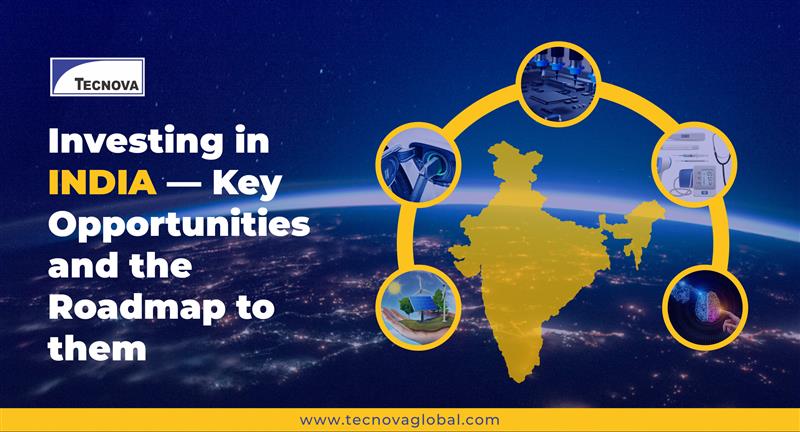
A combination of policy reforms, infrastructure upgrades, trade agreements and sector-specific initiatives is shaping India's investment story. Together, these developments are creating a more competitive and resilient business environment in India.
Here is a detailed understanding of what are the significant factors influencing doing business in India today:
India-UK and India-EU FTA Momentum is Reshaping Global Trade
India's trade relationships are entering a new phase. The India - UK Comprehensive Economic and Trade Agreement (CETA) officially came into force on 15 July 2026. It provides duty-free access for nearly 99% of India's exports to the UK while expanding opportunities in services, professional mobility and government procurement.
Meanwhile, negotiations on the India-EU Free Trade Agreement continue to make steady progress, which reflects India's commitment to deeper global economic integration.
Together, these agreements improve market access, simplify trade procedures and enhance supply chain resilience, making doing business in India increasingly attractive for multinational companies.
ISM 2.0 is Accelerating India's Semiconductor Ambitions
Through the India Semiconductor Mission (ISM) 2.0, the government is strengthening support for semiconductor fabrication, chip design, advanced packaging and research capabilities.
Recent government announcements continue to encourage investments across the semiconductor value chain. This helps establish India as a trusted global manufacturing hub.
India aims to meet 70-75% of its domestic chip demand by 2029, with a roadmap to achieve 3 nm and 2 nm technology nodes under Semicon 2.0. By 2035, the country aspires to rank among the world's leading semiconductor nations, creating significant investment opportunities in India for global technology companies.
India's Mid-Market M&A Landscape is Gaining Momentum
India's Mergers and Acquisitions market is evolving rapidly, with mid-market transactions becoming increasingly important. Cross-border acquisitions and strategic partnerships are rising across manufacturing, healthcare, consumer products, industrial automation and technology sectors.
Many international businesses now prefer acquiring established Indian companies instead of entering the market independently. This approach provides quicker market access, existing distribution networks and local operational expertise while reducing market-entry risks.
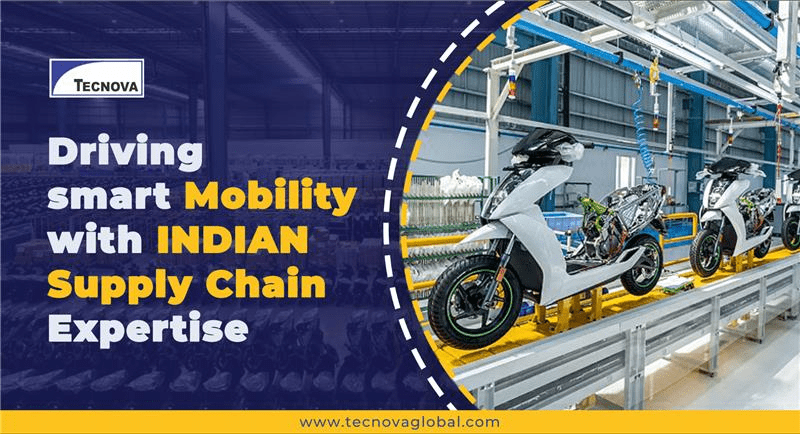
The Rapidly Evolving EV Supply Chain Ecosystem
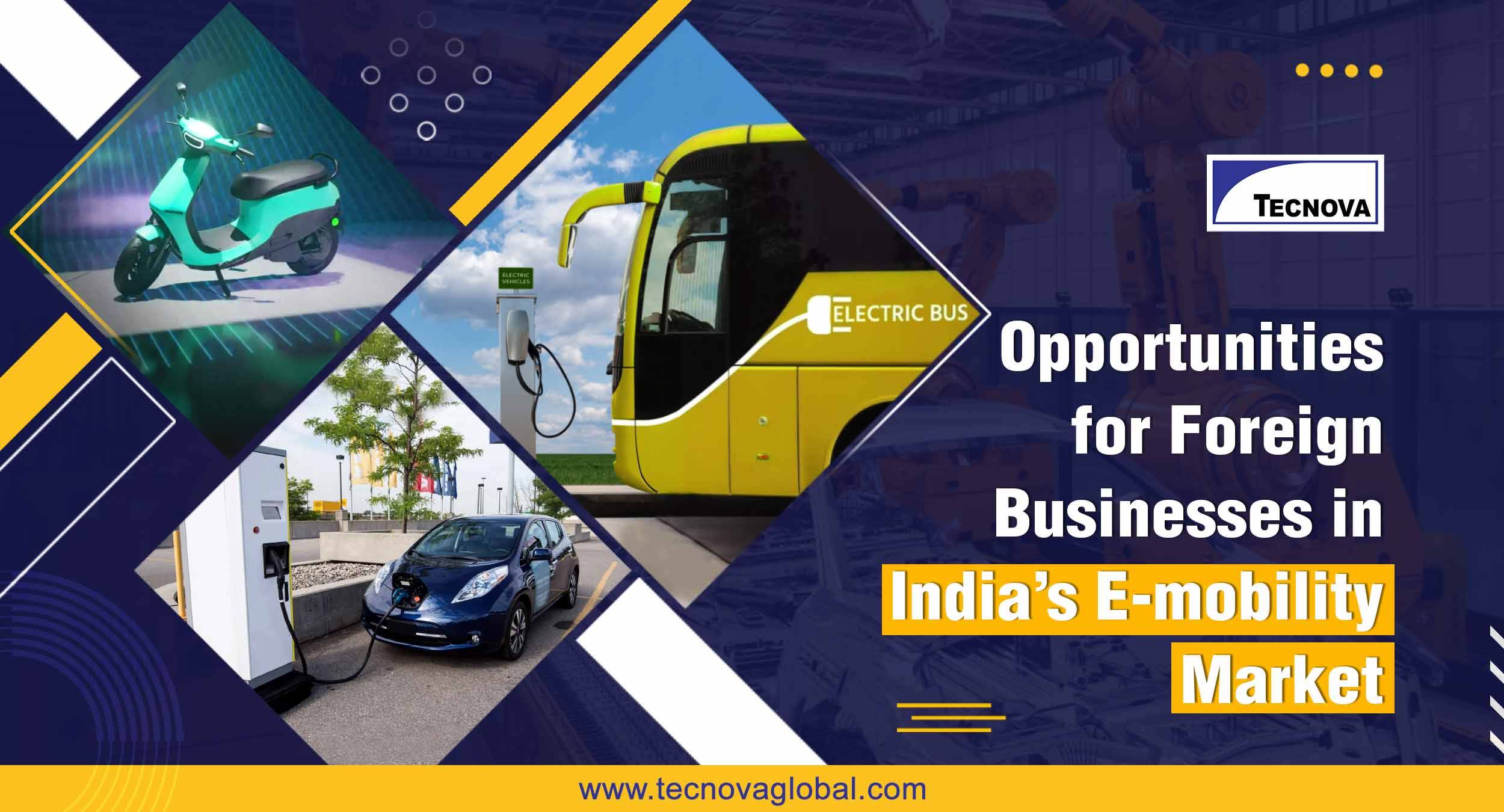
India is rapidly strengthening domestic capabilities in battery manufacturing, charging infrastructure and advanced automotive components. Supported by Production-Linked Incentive (PLI) schemes and continued investments in clean mobility, the sector is becoming an attractive destination for global manufacturers and suppliers.
As per recent government reports, India's EV transition is creating opportunities across the entire value chain. The PM e-Drive programme targets EVs to account for 30% of vehicle sales by 2030, with an estimated 102 million electric vehicles on Indian roads.
This diversified ecosystem enables global businesses to establish resilient regional supply chains while serving both domestic and export markets.
India's Logistics & Infrastructure Transformation
A competitive manufacturing base depends on efficient logistics and India continues to make significant progress in this area. The combined impact of Dedicated Freight Corridors (DFCs), PM Gati Shakti, the National Logistics Policy, industrial corridors and modernised ports is reducing transit times.
Under the Gati Shakti Multi-Modal Cargo Terminal, 306 cargo terminals have been approved, with 118 already commissioned, while freight movement continues shifting from road to rail to improve efficiency and sustainability.
Ease of Doing Business and Regulatory Reforms
India's regulatory landscape continues to become more business-friendly through digitalisation and policy reforms. Company incorporation has become largely online, which enables faster business registration and improved transparency. GST has matured into a more stable indirect tax framework.
Collectively, these reforms reduce administrative friction and create a more predictable operating environment. This makes doing business in India increasingly attractive for multinational companies planning long-term investments.

Several structural trends are making India an increasingly attractive destination for long-term investment. Together, these developments create a more resilient and innovation-driven business ecosystem. Here is a detailed overview:
1. Growth of Global Capability Centres (GCCs)
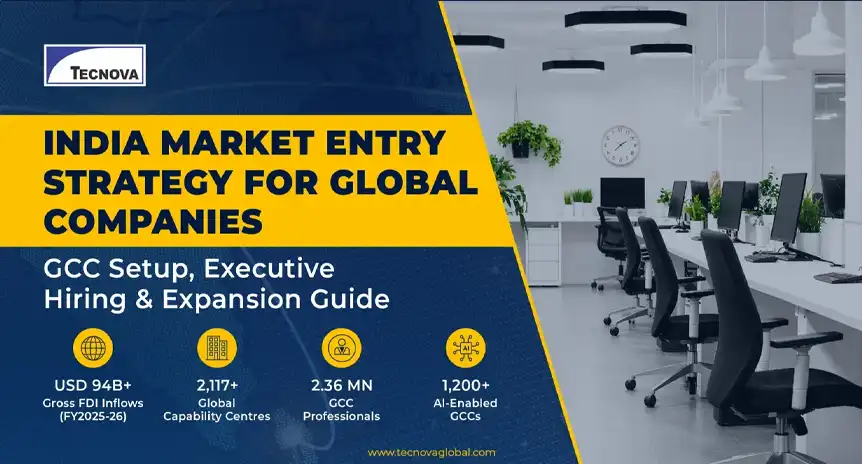
India has evolved from a cost-efficient outsourcing destination into a strategic innovation hub. GCCs accounted for 45% of Grade A office leasing during the first half of 2026. This reflects sustained expansion by multinational organisations.
Manufacturing-led GCCs are also emerging rapidly, with companies increasingly locating engineering, product development and R&D functions in India.
2. Production Linked Incentive (PLI) Schemes Across Key Industries
The Production Linked Incentive (PLI) programme continues to strengthen India's manufacturing competitiveness across multiple sectors. As production capacities expand and supply chains mature, businesses gain access to a larger manufacturing ecosystem supported by long-term policy commitment and export-oriented growth.
3. Rising Domestic Consumption and Expanding Middle-Class Demand
India's consumer market remains one of its strongest competitive advantages. As per reports, 93% of urban consumer growth is expected to come from cities beyond the five largest metros, with nearly 500 emerging consumer cities driving future demand.
This expanding middle class presents significant opportunities for companies across retail, manufacturing, healthcare, financial services and consumer goods
Successfully entering the Indian market requires more than identifying opportunities. Businesses also need local expertise to navigate regulations, establish efficient operations and build sustainable growth.
At Tecnova, our team supports companies across every stage of this journey through integrated advisory services. Here is how we help:
• India Market Entry Strategy: Develops customised entry strategies aligned with market potential, competitive dynamics and long-term business objectives.
• Market Research & Business Planning: Delivers detailed industry insights, demand analysis and commercial feasibility assessments to support informed investment decisions.
• Entity Incorporation & Regulatory Advisory: Tecnova assists with company incorporation, regulatory approvals, compliance requirements and ongoing governance support.
• Partner Search, Site Selection & M&A Advisory: Tecnova identifies strategic partners, distributors and optimal manufacturing or commercial locations based on business priorities.
• Procurement & Vendor Identification: Helps businesses build reliable supplier networks while providing continued strategic guidance as operations scale across India.
With decades of consulting experience and deep knowledge of the Indian business environment, Tecnova enables global companies to reduce market-entry risks, accelerate execution and unlock sustainable growth opportunities.

➣ Why should foreign companies consider doing business in India in 2026?
India offers a combination of a large domestic market, growing foreign investment, expanding manufacturing capabilities, improving infrastructure and stronger global trade connections. India recorded USD 94.53 billion in FDI inflows in FY 2025 to 26. For international companies, the opportunity goes beyond selling products in India. Companies can also use India as a manufacturing base, sourcing destination, GCC location, technology hub or export platform.
➣ How can a foreign company enter the Indian market?
There are several ways for a foreign company to enter India. These include setting up a wholly owned subsidiary, forming a joint venture, appointing a distributor or business partner, acquiring an existing Indian company or making a greenfield investment. Some companies also enter India through a GCC or an R&D centre.
The right approach depends on the company's business objectives, industry, investment plans, regulatory requirements and the level of control it wants to maintain. A proper market entry assessment should ideally be completed before setting up the business.
➣ What are the best India market entry strategies for international companies?
There is no single market entry strategy that works for every foreign company. A company may choose to establish its own subsidiary, work with an Indian partner, appoint distributors, acquire an existing business or build a manufacturing operation.
The right strategy depends on factors such as market demand, competition, regulations, investment requirements, supply chain needs and long term growth plans. Understanding these factors first can help companies avoid costly mistakes during their India expansion.
➣ What are the key regulatory requirements for foreign companies doing business in India?
Foreign companies need to consider several regulatory requirements before starting operations in India. These can include foreign investment rules, company incorporation, taxation, employment regulations, accounting requirements, industry specific licences and ongoing statutory compliances.
The exact requirements depend on the industry and the proposed business model. This is why regulatory and legal due diligence should be carried out before making a significant investment or deciding on an operating structure.
➣ How much FDI can a foreign company invest in India?
The amount of foreign direct investment allowed in India depends on the sector and the applicable government regulations. Some sectors allow up to 100% foreign ownership under the automatic route while others have specific investment limits or require government approval.
Foreign companies should therefore check the FDI rules that apply to their particular industry and business activity before making an investment decision.
➣ What are the biggest investment opportunities in India for foreign companies?
India offers opportunities across several sectors including manufacturing, automotive, electric vehicles, electronics, semiconductors, pharmaceuticals, renewable energy, logistics, technology and digital services.
GCCs and advanced engineering are also becoming increasingly important areas for international companies. Government initiatives such as PLI schemes are further supporting investment and local manufacturing in selected industries.
The right opportunity will depend on the company's industry, technology, target customers, investment capacity and long term business strategy.
➣ Is India a good manufacturing and sourcing destination for global companies?
Yes. India is increasingly becoming an important manufacturing and sourcing destination for international companies. The country offers a large domestic market, a growing supplier ecosystem, engineering talent and improving infrastructure.
Companies can also use India to serve international markets through exports and global sourcing operations. However, choosing the right location, finding reliable suppliers and understanding logistics and regulatory requirements are important before setting up manufacturing or sourcing operations.
➣ How can foreign companies find reliable Indian business partners, distributors or suppliers?
Foreign companies should follow a structured process when selecting Indian partners or suppliers. This can start with identifying potential companies and evaluating their financial strength, market presence, capabilities, customer relationships and track record.
Companies should also carry out appropriate commercial and compliance due diligence before entering into a partnership. Clear contracts and regular performance reviews can further help manage risks and build successful long term business relationships in India.
➣ Why are GCCs an attractive expansion strategy for global companies in India?
India's GCC ecosystem has evolved significantly. GCCs are no longer limited to back office or basic IT functions. Global companies are increasingly using India for engineering, R&D, product development, analytics, finance, procurement and other strategic activities.
For international companies, an India GCC can provide access to specialised talent and help build capabilities at scale. It can also become a technology, innovation or global operations hub as the company's presence in India grows.
➣ What are the biggest challenges for foreign companies entering and expanding in India?
Foreign companies can face several challenges when entering India. These may include understanding regulations, selecting the right business structure, finding reliable partners, hiring the right leadership team, building local supply chains and adapting global business models to the Indian market.
India is also a diverse market with significant differences across regions and customer segments. Strong market research, local expertise, proper due diligence and a clear India entry strategy can help international companies manage these challenges and build a sustainable presence in the country.
References
Prerequisite Approvals and Licenses for Doing Business in India
Indian States Improving Ease of Doing Business in the Country
How Do I Find Out the Size of My Potential Indian Market?
For Conversion: 1 USD = INR 95.74
Key Takeaways
➣ India attracted over USD 94 billion in FDI during FY 2025-26.
➣ India - UK CETA and the proposed India - EU FTA are improving global market access.
➣ Semicon 2.0 targets meeting 70-75% of domestic chip demand by 2029.
➣ PM e-Drive programme aims for 30% EV sales by 2030.
➣ Tecnova helps global businesses enter, establish and expand successfully in India.
India remains one of the world's fastest-growing major economies, supported by strong domestic demand, policy reforms and rising global investor confidence. The nation attracted more than USD 94 billion in foreign direct investment (FDI) during FY 2025-26, as its digital economy and manufacturing sectors continue to expand rapidly.
At the same time, new trade agreements, infrastructure investments and regulatory reforms are reshaping the business landscape. For global companies, understanding these developments is important for doing business in India.
A combination of policy reforms, infrastructure upgrades, trade agreements and sector-specific initiatives is shaping India's investment story. Together, these developments are creating a more competitive and resilient business environment in India.
Here is a detailed understanding of what are the significant factors influencing doing business in India today:
India-UK and India-EU FTA Momentum is Reshaping Global Trade
India's trade relationships are entering a new phase. The India - UK Comprehensive Economic and Trade Agreement (CETA) officially came into force on 15 July 2026. It provides duty-free access for nearly 99% of India's exports to the UK while expanding opportunities in services, professional mobility and government procurement.
Meanwhile, negotiations on the India-EU Free Trade Agreement continue to make steady progress, which reflects India's commitment to deeper global economic integration.
Together, these agreements improve market access, simplify trade procedures and enhance supply chain resilience, making doing business in India increasingly attractive for multinational companies.
ISM 2.0 is Accelerating India's Semiconductor Ambitions
Through the India Semiconductor Mission (ISM) 2.0, the government is strengthening support for semiconductor fabrication, chip design, advanced packaging and research capabilities.
Recent government announcements continue to encourage investments across the semiconductor value chain. This helps establish India as a trusted global manufacturing hub.
India aims to meet 70-75% of its domestic chip demand by 2029, with a roadmap to achieve 3 nm and 2 nm technology nodes under Semicon 2.0. By 2035, the country aspires to rank among the world's leading semiconductor nations, creating significant investment opportunities in India for global technology companies.
India's Mid-Market M&A Landscape is Gaining Momentum
India's Mergers and Acquisitions market is evolving rapidly, with mid-market transactions becoming increasingly important. Cross-border acquisitions and strategic partnerships are rising across manufacturing, healthcare, consumer products, industrial automation and technology sectors.
Many international businesses now prefer acquiring established Indian companies instead of entering the market independently. This approach provides quicker market access, existing distribution networks and local operational expertise while reducing market-entry risks.
The Rapidly Evolving EV Supply Chain Ecosystem
India is rapidly strengthening domestic capabilities in battery manufacturing, charging infrastructure and advanced automotive components. Supported by Production-Linked Incentive (PLI) schemes and continued investments in clean mobility, the sector is becoming an attractive destination for global manufacturers and suppliers.
As per recent government reports, India's EV transition is creating opportunities across the entire value chain. The PM e-Drive programme targets EVs to account for 30% of vehicle sales by 2030, with an estimated 102 million electric vehicles on Indian roads.
This diversified ecosystem enables global businesses to establish resilient regional supply chains while serving both domestic and export markets.
India's Logistics & Infrastructure Transformation
A competitive manufacturing base depends on efficient logistics and India continues to make significant progress in this area. The combined impact of Dedicated Freight Corridors (DFCs), PM Gati Shakti, the National Logistics Policy, industrial corridors and modernised ports is reducing transit times.
Under the Gati Shakti Multi-Modal Cargo Terminal, 306 cargo terminals have been approved, with 118 already commissioned, while freight movement continues shifting from road to rail to improve efficiency and sustainability.
Ease of Doing Business and Regulatory Reforms
India's regulatory landscape continues to become more business-friendly through digitalisation and policy reforms. Company incorporation has become largely online, which enables faster business registration and improved transparency. GST has matured into a more stable indirect tax framework.
Collectively, these reforms reduce administrative friction and create a more predictable operating environment. This makes doing business in India increasingly attractive for multinational companies planning long-term investments.
Several structural trends are making India an increasingly attractive destination for long-term investment. Together, these developments create a more resilient and innovation-driven business ecosystem. Here is a detailed overview:
1. Growth of Global Capability Centres (GCCs)
India has evolved from a cost-efficient outsourcing destination into a strategic innovation hub. GCCs accounted for 45% of Grade A office leasing during the first half of 2026. This reflects sustained expansion by multinational organisations.
Manufacturing-led GCCs are also emerging rapidly, with companies increasingly locating engineering, product development and R&D functions in India.
2. Production Linked Incentive (PLI) Schemes Across Key Industries
The Production Linked Incentive (PLI) programme continues to strengthen India's manufacturing competitiveness across multiple sectors. As production capacities expand and supply chains mature, businesses gain access to a larger manufacturing ecosystem supported by long-term policy commitment and export-oriented growth.
3. Rising Domestic Consumption and Expanding Middle-Class Demand
India's consumer market remains one of its strongest competitive advantages. As per reports, 93% of urban consumer growth is expected to come from cities beyond the five largest metros, with nearly 500 emerging consumer cities driving future demand.
This expanding middle class presents significant opportunities for companies across retail, manufacturing, healthcare, financial services and consumer goods
Successfully entering the Indian market requires more than identifying opportunities. Businesses also need local expertise to navigate regulations, establish efficient operations and build sustainable growth.
At Tecnova, our team supports companies across every stage of this journey through integrated advisory services. Here is how we help:
• India Market Entry Strategy: Develops customised entry strategies aligned with market potential, competitive dynamics and long-term business objectives.
• Market Research & Business Planning: Delivers detailed industry insights, demand analysis and commercial feasibility assessments to support informed investment decisions.
• Entity Incorporation & Regulatory Advisory: Tecnova assists with company incorporation, regulatory approvals, compliance requirements and ongoing governance support.
• Partner Search, Site Selection & M&A Advisory: Tecnova identifies strategic partners, distributors and optimal manufacturing or commercial locations based on business priorities.
• Procurement & Vendor Identification: Helps businesses build reliable supplier networks while providing continued strategic guidance as operations scale across India.
With decades of consulting experience and deep knowledge of the Indian business environment, Tecnova enables global companies to reduce market-entry risks, accelerate execution and unlock sustainable growth opportunities.
➣ Why should foreign companies consider doing business in India in 2026?
India offers a combination of a large domestic market, growing foreign investment, expanding manufacturing capabilities, improving infrastructure and stronger global trade connections. India recorded USD 94.53 billion in FDI inflows in FY 2025 to 26. For international companies, the opportunity goes beyond selling products in India. Companies can also use India as a manufacturing base, sourcing destination, GCC location, technology hub or export platform.
➣ How can a foreign company enter the Indian market?
There are several ways for a foreign company to enter India. These include setting up a wholly owned subsidiary, forming a joint venture, appointing a distributor or business partner, acquiring an existing Indian company or making a greenfield investment. Some companies also enter India through a GCC or an R&D centre.
The right approach depends on the company's business objectives, industry, investment plans, regulatory requirements and the level of control it wants to maintain. A proper market entry assessment should ideally be completed before setting up the business.
➣ What are the best India market entry strategies for international companies?
There is no single market entry strategy that works for every foreign company. A company may choose to establish its own subsidiary, work with an Indian partner, appoint distributors, acquire an existing business or build a manufacturing operation.
The right strategy depends on factors such as market demand, competition, regulations, investment requirements, supply chain needs and long term growth plans. Understanding these factors first can help companies avoid costly mistakes during their India expansion.
➣ What are the key regulatory requirements for foreign companies doing business in India?
Foreign companies need to consider several regulatory requirements before starting operations in India. These can include foreign investment rules, company incorporation, taxation, employment regulations, accounting requirements, industry specific licences and ongoing statutory compliances.
The exact requirements depend on the industry and the proposed business model. This is why regulatory and legal due diligence should be carried out before making a significant investment or deciding on an operating structure.
➣ How much FDI can a foreign company invest in India?
The amount of foreign direct investment allowed in India depends on the sector and the applicable government regulations. Some sectors allow up to 100% foreign ownership under the automatic route while others have specific investment limits or require government approval.
Foreign companies should therefore check the FDI rules that apply to their particular industry and business activity before making an investment decision.
➣ What are the biggest investment opportunities in India for foreign companies?
India offers opportunities across several sectors including manufacturing, automotive, electric vehicles, electronics, semiconductors, pharmaceuticals, renewable energy, logistics, technology and digital services.
GCCs and advanced engineering are also becoming increasingly important areas for international companies. Government initiatives such as PLI schemes are further supporting investment and local manufacturing in selected industries.
The right opportunity will depend on the company's industry, technology, target customers, investment capacity and long term business strategy.
➣ Is India a good manufacturing and sourcing destination for global companies?
Yes. India is increasingly becoming an important manufacturing and sourcing destination for international companies. The country offers a large domestic market, a growing supplier ecosystem, engineering talent and improving infrastructure.
Companies can also use India to serve international markets through exports and global sourcing operations. However, choosing the right location, finding reliable suppliers and understanding logistics and regulatory requirements are important before setting up manufacturing or sourcing operations.
➣ How can foreign companies find reliable Indian business partners, distributors or suppliers?
Foreign companies should follow a structured process when selecting Indian partners or suppliers. This can start with identifying potential companies and evaluating their financial strength, market presence, capabilities, customer relationships and track record.
Companies should also carry out appropriate commercial and compliance due diligence before entering into a partnership. Clear contracts and regular performance reviews can further help manage risks and build successful long term business relationships in India.
➣ Why are GCCs an attractive expansion strategy for global companies in India?
India's GCC ecosystem has evolved significantly. GCCs are no longer limited to back office or basic IT functions. Global companies are increasingly using India for engineering, R&D, product development, analytics, finance, procurement and other strategic activities.
For international companies, an India GCC can provide access to specialised talent and help build capabilities at scale. It can also become a technology, innovation or global operations hub as the company's presence in India grows.
➣ What are the biggest challenges for foreign companies entering and expanding in India?
Foreign companies can face several challenges when entering India. These may include understanding regulations, selecting the right business structure, finding reliable partners, hiring the right leadership team, building local supply chains and adapting global business models to the Indian market.
India is also a diverse market with significant differences across regions and customer segments. Strong market research, local expertise, proper due diligence and a clear India entry strategy can help international companies manage these challenges and build a sustainable presence in the country.
References
Prerequisite Approvals and Licenses for Doing Business in India
Indian States Improving Ease of Doing Business in the Country
How Do I Find Out the Size of My Potential Indian Market?
For Conversion: 1 USD = INR 95.74













%20(1).png)
.jpg)
.png)


%20(1).png)
.jpg)


.png)



.jpeg)










.png)

.png)



.jpg)




.jpg)

.jpg)