Services


Sectors
Insights
COMMERCIALIZATION
Insights







Follow Us
Key Takeaways
• India's auto component industry reached USD 85.9 billion in FY2026, reinforcing its position as a global automotive sourcing hub.
• Strong government support, including the PLI Scheme and 100% FDI, continues to accelerate manufacturing and foreign investment.
• India's skilled workforce, advanced manufacturing capabilities and quality standards make it a preferred sourcing destination.
• A successful sourcing strategy depends on selecting the right suppliers, conducting due diligence and building long-term partnerships.
• With local expertise and end-to-end advisory, Tecnova helps businesses build reliable automotive sourcing networks in India.
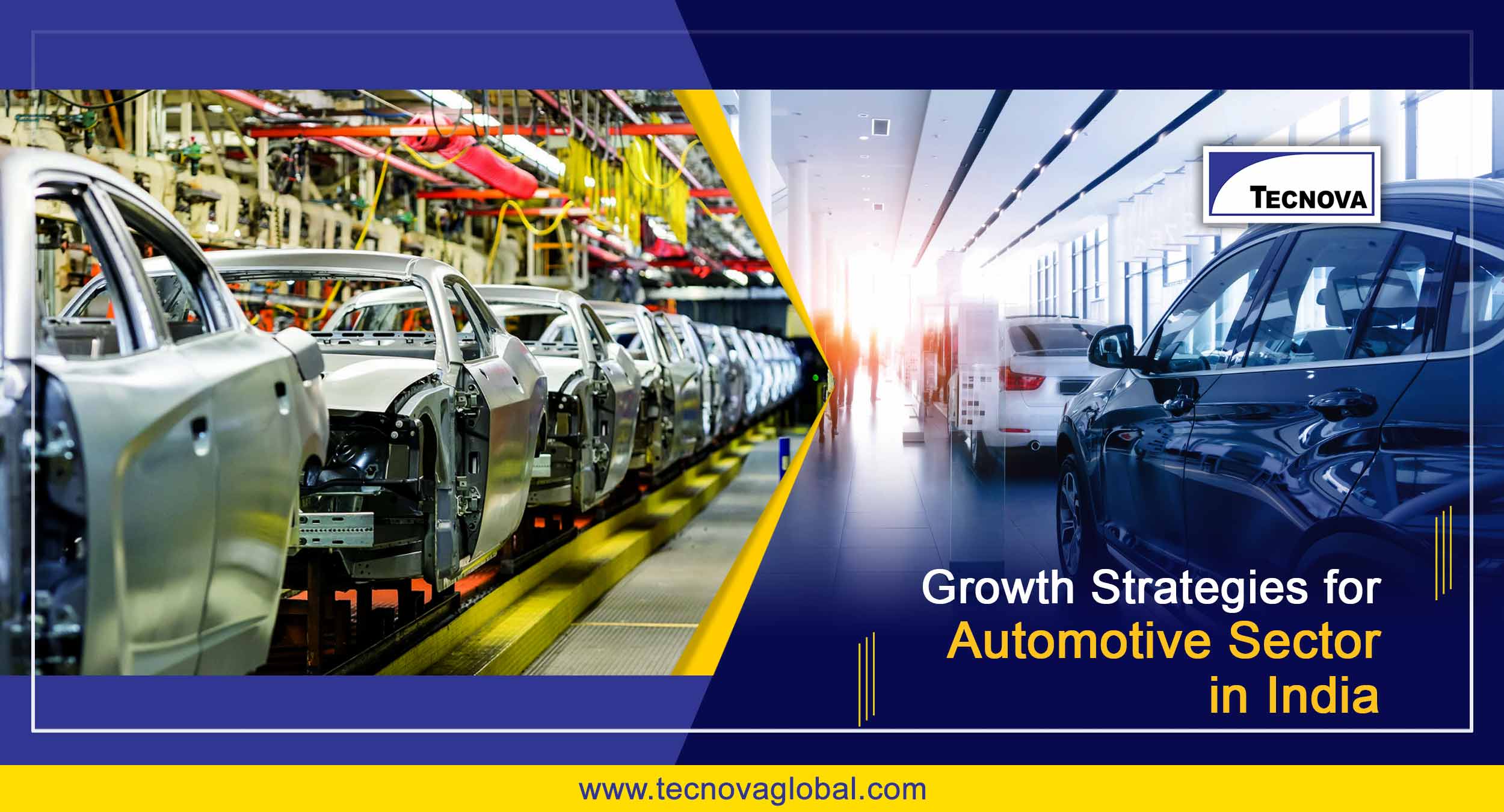
India's transformation into a manufacturing powerhouse offers far more than cost advantages. Today, automotive sourcing in India is powered by a mature supplier ecosystem, world-class engineering capabilities and supportive government policies.
As businesses diversify their supply chains, India has emerged as a trusted sourcing destination.
According to reports, India’s auto component industry reached USD 85.9 billion in FY2026, growing 12.7% year-on-year, while exports increased to USD 24 billion.
These achievements continue to strengthen India's position as a leading hub for global sourcing and high-quality automotive manufacturing.
India's automotive component sector is one of the largest manufacturing industries in the country, supplying components for passenger vehicles, commercial vehicles, two-wheelers, electric vehicles and the global aftermarket.
The sector's rapid growth is supported by continuous investments in automation, digital manufacturing and research and development. Reports suggest that supplies to original equipment manufacturers increased by 16.3% in FY 2026, while the aftermarket segment also recorded healthy growth.
India's manufacturing ecosystem is also benefiting from global supply chain diversification. As companies adopt China Plus One sourcing strategies, the country's skilled workforce, internationally certified production facilities and supportive trade policies make it an increasingly attractive destination for long-term automotive sourcing partnerships.
Global manufacturers today are looking for sourcing destinations that offer more than competitive pricing. India has emerged as a preferred destination by offering a unique combination of cost-efficient production, engineering expertise and policy support.
According to the Ministry of Commerce & Industry, the sector contributes 2.3% to India's GDP, directly employs over 1.5 million people and exports more than 25% of its annual production to major markets.
Meanwhile, the industry recorded a turnover of USD 85.9 billion in FY2026, which reflects strong global confidence in Indian manufacturing. Backed by infrastructure investments and favourable trade agreements, automotive sourcing in India continues to offer long-term value for businesses seeking reliable sourcing partnerships.
A combination of manufacturing capabilities, government policies, growing export competitiveness and continuous investments in technology and innovation drives India's rise as a global automotive sourcing hub.
Here is a detailed understanding of why global automotive companies are sourcing auto components from India:
1. Rapid Market Growth
India's automotive component industry has entered a new phase of sustained expansion. The industry has also more than doubled in size since FY2021, which reflects robust domestic demand and continuous investment in manufacturing capacity.
2. Competitive Manufacturing Hub
India offers a strong combination of cost efficiency and manufacturing excellence. There is a large network of auto component manufacturers in India, supported by skilled engineers, modern production facilities and internationally recognised quality standards. It enables businesses to source a wide range of components without compromising on quality.
3. Government Support
The PLI Scheme promotes domestic manufacturing of advanced auto components and EV technologies, while 100% FDI through the automatic route enables foreign businesses to invest and expand with ease. Together, these policies create a favourable environment for long-term manufacturing and global sourcing in India.
4. Export Opportunities
India exports automotive components to major markets across North America, Europe, the Middle East, Africa and Asia. It is reinforcing India’s role in global supply chains. As businesses adopt the China Plus One strategy, India is increasingly becoming the preferred destination for manufacturing, sourcing and export-oriented investments.
5. Local Market Opportunities
India's rapidly expanding automotive market creates opportunities beyond exports. Rising passenger vehicle ownership, commercial vehicle demand, electric mobility and a growing aftermarket are driving sustained demand for automotive components.
In FY 2026, supplies to original equipment manufacturers increased by 16.3%, while the aftermarket expanded by 9%.
6. Skilled Workforce & R&D Capabilities
India combines a large engineering talent pool with growing investments in research, design and advanced manufacturing technologies. Manufacturers are increasingly adopting automation and digital production to improve quality and productivity.
These capabilities enable global businesses to source high-quality products while building resilient and future-ready supply chains.
Choosing India as a sourcing destination is only the first step. Achieving long-term success requires a structured strategy that balances cost, quality, compliance and supply chain resilience. Here are several best practices that can help global businesses build a reliable sourcing network while reducing operational risks:
1. Define Your Sourcing Objectives
Start by identifying what you want to achieve through automotive sourcing in India. Your objectives may include cost optimisation, supplier diversification, localisation and access to specialised manufacturing capabilities.
Defining these priorities early helps narrow supplier options and ensures sourcing decisions align with broader business goals.
2. Identify the Right Manufacturing Clusters
India's automotive manufacturing ecosystem is concentrated across well-established industrial clusters. Selecting the right cluster based on product requirements, supplier capabilities and logistics can significantly improve efficiency and reduce lead times.
3. Evaluate and Shortlist Suppliers
Once potential suppliers are identified, businesses should evaluate them against consistent criteria. For example, manufacturing capability, production capacity, quality certifications such as IATF 16949 and ISO 9001, export experience and financial stability.
A structured evaluation process helps businesses identify suppliers capable of meeting global quality standards.
4. Conduct Supplier Due Diligence
Supplier selection should extend beyond pricing and production capacity. Factory audits, quality management systems, ESG compliance, labour practices and risk assessments have become increasingly important as global regulations evolve.
Comprehensive due diligence reduces operational risks, strengthens supply chain resilience and helps businesses meet international compliance requirements.
5. Build Long-Term Supplier Relationships
Successful sourcing is built on collaboration rather than transactional purchasing. Regular performance reviews, continuous improvement initiatives, joint product development and transparent communication help strengthen supplier relationships over time.
Long-term partnerships also improve supply continuity, encourage innovation and enable suppliers to better support changing business requirements.


Building a dependable supplier network in India requires local market knowledge and effective execution.
Tecnova supports international businesses throughout the sourcing journey by combining strategic advisory with on-ground expertise. Here is how we help businesses:
• Developing customised strategies aligned with business objectives.
• Identifying and evaluating qualified suppliers across India's leading manufacturing clusters.
• Conducting supplier due diligence, quality assessments and compliance reviews.
• Supporting supplier negotiations, localisation planning and risk mitigation.
• Providing end-to-end advisory to build resilient, scalable and future-ready sourcing networks.
With deep market expertise and a structured sourcing approach, Tecnova enables global businesses to build resilient supply chains and achieve sustainable growth in India's automotive sector.
1. Why are global automotive companies sourcing auto components from India?
Global automotive companies are sourcing auto components from India because the country offers a combination of competitive manufacturing costs, engineering expertise, a large supplier base, improving manufacturing capabilities and strong export potential.
India's auto component industry reached USD 85.9 billion in FY2026, with exports reaching USD 24 billion. This growing ecosystem gives international businesses access to suppliers serving passenger vehicles, commercial vehicles, two-wheelers, EVs and the aftermarket.
For companies looking to diversify their supply chains, India can therefore offer both cost advantages and long-term supply chain resilience.
2. What types of auto components can I source from India?
As an international buyer, you can source a wide range of automotive components from India, including castings, forgings, machined components, electrical and electronic components, transmission parts, engine components, suspension systems, braking components, body and interior parts, EV components and aftermarket products.
The depth of India's supplier ecosystem makes it possible to develop sourcing programs for both standard components and highly engineered products.
3. How do I find reliable auto component manufacturers in India?
Finding a supplier should go beyond searching for the lowest-cost manufacturer. International companies should evaluate potential suppliers based on manufacturing capabilities, production capacity, quality certifications, technology, export experience, financial stability and previous customer profile.
Factory visits, technical assessments and sample production can also help verify whether a supplier is capable of meeting your specifications and quality requirements.
Working with a local sourcing or market-entry partner can make this process more efficient by helping identify and shortlist suppliers that match your specific requirements.
4. What quality certifications should I look for when sourcing automotive components from India?
For automotive sourcing, IATF 16949 is one of the most important quality management standards to consider because it is specifically focused on the automotive industry.
Depending on your requirements, you may also evaluate suppliers against ISO 9001, ISO 14001 and ISO 45001, along with customer-specific quality requirements and product certifications.
However, certification alone should not determine supplier selection. A thorough assessment of manufacturing processes, quality controls, traceability, testing capabilities and actual production performance is equally important.
5. Is automotive sourcing from India suitable for China Plus One strategies?
Yes. India is increasingly being evaluated as part of China Plus One sourcing strategies because it offers a large manufacturing base, engineering talent, expanding export capabilities and a growing network of qualified suppliers.
For global automotive companies, India can provide an opportunity to diversify sourcing across multiple geographies rather than relying heavily on a single manufacturing market.
However, China Plus One should not mean simply replacing one supplier with another. Businesses should develop a structured India sourcing strategy covering supplier qualification, logistics, quality, compliance, localization and risk management.
6. Which automotive manufacturing clusters in India should foreign companies consider?
India has several established automotive manufacturing clusters, with different regions offering strengths across OEM manufacturing, auto components, engineering and EV-related production.
The right location depends on what you are sourcing, the required supplier capabilities, logistics requirements, customer proximity and potential for future expansion.
For an international company, choosing a manufacturing cluster should therefore be part of the broader India market entry and sourcing strategy, rather than a decision based solely on labour or land costs.
7. What due diligence should I conduct before selecting an Indian automotive supplier?
Supplier due diligence should cover much more than production capacity and pricing.
International buyers should assess financial health, ownership structure, manufacturing facilities, quality systems, customer concentration, delivery performance, ESG practices, labour compliance, regulatory requirements, cybersecurity and business continuity planning.
Factory audits and technical evaluations are particularly important when sourcing safety-critical or high-value components.
A structured due-diligence process helps reduce the risk of quality failures, supply interruptions and unexpected compliance issues after the supplier relationship begins.
8. Can foreign automotive companies invest directly in India's auto component manufacturing sector?
Foreign companies can invest in India's manufacturing sector, with 100% FDI permitted through the automatic route in the relevant manufacturing activities, subject to applicable regulations and sector-specific requirements.
This creates flexibility for international businesses considering different models—from sourcing from existing Indian suppliers to establishing their own manufacturing presence, joint ventures or wholly owned operations.
The appropriate approach depends on factors such as expected volumes, investment requirements, intellectual property, localization objectives and long-term India growth plans.
9. Is India competitive only because of lower manufacturing costs?
No. Cost remains an important consideration, but it is no longer the only reason companies consider India.
India's attractiveness increasingly comes from the combination of cost competitiveness, engineering talent, supplier diversity, domestic market scale, manufacturing capabilities and export opportunities.
Recent industry data reinforces this broader shift. OEM supplies grew by 16.3% in FY2026, while the automotive aftermarket grew by 9%. This indicates that India's automotive ecosystem is expanding across both domestic and international demand.
For global businesses, the bigger opportunity is to combine India's cost advantages with engineering, localization and supply-chain diversification.
10. How can a global company build an automotive sourcing strategy in India?
A successful India sourcing strategy generally starts with clearly defining sourcing objectives and then identifying suitable manufacturing clusters and suppliers.
The process should include supplier identification, technical and commercial evaluation, factory audits, due diligence, quality assessment, negotiations, sample validation, localization planning and ongoing supplier performance management.
For companies entering India for the first time, local expertise can significantly simplify the process.
Tecnova supports international businesses with India market entry, supplier identification and evaluation, due diligence, sourcing strategy, localization and ongoing operational support. This enables global automotive companies to move from simply identifying Indian suppliers to building a reliable and scalable sourcing network.
From Imports to Made-in-India: Why Localising EV Manufacturing is the Key
Tapping into India’s Auto Component Aftermarket Sector
Business Avenues for Auto Component Manufacturers in India
Opportunities for Foreign Businesses in India’s E-mobility Market
Key Takeaways
• India's auto component industry reached USD 85.9 billion in FY2026, reinforcing its position as a global automotive sourcing hub.
• Strong government support, including the PLI Scheme and 100% FDI, continues to accelerate manufacturing and foreign investment.
• India's skilled workforce, advanced manufacturing capabilities and quality standards make it a preferred sourcing destination.
• A successful sourcing strategy depends on selecting the right suppliers, conducting due diligence and building long-term partnerships.
• With local expertise and end-to-end advisory, Tecnova helps businesses build reliable automotive sourcing networks in India.
India's transformation into a manufacturing powerhouse offers far more than cost advantages. Today, automotive sourcing in India is powered by a mature supplier ecosystem, world-class engineering capabilities and supportive government policies.
As businesses diversify their supply chains, India has emerged as a trusted sourcing destination.
According to reports, India’s auto component industry reached USD 85.9 billion in FY2026, growing 12.7% year-on-year, while exports increased to USD 24 billion.
These achievements continue to strengthen India's position as a leading hub for global sourcing and high-quality automotive manufacturing.
India's automotive component sector is one of the largest manufacturing industries in the country, supplying components for passenger vehicles, commercial vehicles, two-wheelers, electric vehicles and the global aftermarket.
The sector's rapid growth is supported by continuous investments in automation, digital manufacturing and research and development. Reports suggest that supplies to original equipment manufacturers increased by 16.3% in FY 2026, while the aftermarket segment also recorded healthy growth.
India's manufacturing ecosystem is also benefiting from global supply chain diversification. As companies adopt China Plus One sourcing strategies, the country's skilled workforce, internationally certified production facilities and supportive trade policies make it an increasingly attractive destination for long-term automotive sourcing partnerships.
Global manufacturers today are looking for sourcing destinations that offer more than competitive pricing. India has emerged as a preferred destination by offering a unique combination of cost-efficient production, engineering expertise and policy support.
According to the Ministry of Commerce & Industry, the sector contributes 2.3% to India's GDP, directly employs over 1.5 million people and exports more than 25% of its annual production to major markets.
Meanwhile, the industry recorded a turnover of USD 85.9 billion in FY2026, which reflects strong global confidence in Indian manufacturing. Backed by infrastructure investments and favourable trade agreements, automotive sourcing in India continues to offer long-term value for businesses seeking reliable sourcing partnerships.
A combination of manufacturing capabilities, government policies, growing export competitiveness and continuous investments in technology and innovation drives India's rise as a global automotive sourcing hub.
Here is a detailed understanding of why global automotive companies are sourcing auto components from India:
1. Rapid Market Growth
India's automotive component industry has entered a new phase of sustained expansion. The industry has also more than doubled in size since FY2021, which reflects robust domestic demand and continuous investment in manufacturing capacity.
2. Competitive Manufacturing Hub
India offers a strong combination of cost efficiency and manufacturing excellence. There is a large network of auto component manufacturers in India, supported by skilled engineers, modern production facilities and internationally recognised quality standards. It enables businesses to source a wide range of components without compromising on quality.
3. Government Support
The PLI Scheme promotes domestic manufacturing of advanced auto components and EV technologies, while 100% FDI through the automatic route enables foreign businesses to invest and expand with ease. Together, these policies create a favourable environment for long-term manufacturing and global sourcing in India.
4. Export Opportunities
India exports automotive components to major markets across North America, Europe, the Middle East, Africa and Asia. It is reinforcing India’s role in global supply chains. As businesses adopt the China Plus One strategy, India is increasingly becoming the preferred destination for manufacturing, sourcing and export-oriented investments.
5. Local Market Opportunities
India's rapidly expanding automotive market creates opportunities beyond exports. Rising passenger vehicle ownership, commercial vehicle demand, electric mobility and a growing aftermarket are driving sustained demand for automotive components.
In FY 2026, supplies to original equipment manufacturers increased by 16.3%, while the aftermarket expanded by 9%.
6. Skilled Workforce & R&D Capabilities
India combines a large engineering talent pool with growing investments in research, design and advanced manufacturing technologies. Manufacturers are increasingly adopting automation and digital production to improve quality and productivity.
These capabilities enable global businesses to source high-quality products while building resilient and future-ready supply chains.
Choosing India as a sourcing destination is only the first step. Achieving long-term success requires a structured strategy that balances cost, quality, compliance and supply chain resilience. Here are several best practices that can help global businesses build a reliable sourcing network while reducing operational risks:
1. Define Your Sourcing Objectives
Start by identifying what you want to achieve through automotive sourcing in India. Your objectives may include cost optimisation, supplier diversification, localisation and access to specialised manufacturing capabilities.
Defining these priorities early helps narrow supplier options and ensures sourcing decisions align with broader business goals.
2. Identify the Right Manufacturing Clusters
India's automotive manufacturing ecosystem is concentrated across well-established industrial clusters. Selecting the right cluster based on product requirements, supplier capabilities and logistics can significantly improve efficiency and reduce lead times.
3. Evaluate and Shortlist Suppliers
Once potential suppliers are identified, businesses should evaluate them against consistent criteria. For example, manufacturing capability, production capacity, quality certifications such as IATF 16949 and ISO 9001, export experience and financial stability.
A structured evaluation process helps businesses identify suppliers capable of meeting global quality standards.
4. Conduct Supplier Due Diligence
Supplier selection should extend beyond pricing and production capacity. Factory audits, quality management systems, ESG compliance, labour practices and risk assessments have become increasingly important as global regulations evolve.
Comprehensive due diligence reduces operational risks, strengthens supply chain resilience and helps businesses meet international compliance requirements.
5. Build Long-Term Supplier Relationships
Successful sourcing is built on collaboration rather than transactional purchasing. Regular performance reviews, continuous improvement initiatives, joint product development and transparent communication help strengthen supplier relationships over time.
Long-term partnerships also improve supply continuity, encourage innovation and enable suppliers to better support changing business requirements.
Building a dependable supplier network in India requires local market knowledge and effective execution.
Tecnova supports international businesses throughout the sourcing journey by combining strategic advisory with on-ground expertise. Here is how we help businesses:
• Developing customised strategies aligned with business objectives.
• Identifying and evaluating qualified suppliers across India's leading manufacturing clusters.
• Conducting supplier due diligence, quality assessments and compliance reviews.
• Supporting supplier negotiations, localisation planning and risk mitigation.
• Providing end-to-end advisory to build resilient, scalable and future-ready sourcing networks.
With deep market expertise and a structured sourcing approach, Tecnova enables global businesses to build resilient supply chains and achieve sustainable growth in India's automotive sector.
1. Why are global automotive companies sourcing auto components from India?
Global automotive companies are sourcing auto components from India because the country offers a combination of competitive manufacturing costs, engineering expertise, a large supplier base, improving manufacturing capabilities and strong export potential.
India's auto component industry reached USD 85.9 billion in FY2026, with exports reaching USD 24 billion. This growing ecosystem gives international businesses access to suppliers serving passenger vehicles, commercial vehicles, two-wheelers, EVs and the aftermarket.
For companies looking to diversify their supply chains, India can therefore offer both cost advantages and long-term supply chain resilience.
2. What types of auto components can I source from India?
As an international buyer, you can source a wide range of automotive components from India, including castings, forgings, machined components, electrical and electronic components, transmission parts, engine components, suspension systems, braking components, body and interior parts, EV components and aftermarket products.
The depth of India's supplier ecosystem makes it possible to develop sourcing programs for both standard components and highly engineered products.
3. How do I find reliable auto component manufacturers in India?
Finding a supplier should go beyond searching for the lowest-cost manufacturer. International companies should evaluate potential suppliers based on manufacturing capabilities, production capacity, quality certifications, technology, export experience, financial stability and previous customer profile.
Factory visits, technical assessments and sample production can also help verify whether a supplier is capable of meeting your specifications and quality requirements.
Working with a local sourcing or market-entry partner can make this process more efficient by helping identify and shortlist suppliers that match your specific requirements.
4. What quality certifications should I look for when sourcing automotive components from India?
For automotive sourcing, IATF 16949 is one of the most important quality management standards to consider because it is specifically focused on the automotive industry.
Depending on your requirements, you may also evaluate suppliers against ISO 9001, ISO 14001 and ISO 45001, along with customer-specific quality requirements and product certifications.
However, certification alone should not determine supplier selection. A thorough assessment of manufacturing processes, quality controls, traceability, testing capabilities and actual production performance is equally important.
5. Is automotive sourcing from India suitable for China Plus One strategies?
Yes. India is increasingly being evaluated as part of China Plus One sourcing strategies because it offers a large manufacturing base, engineering talent, expanding export capabilities and a growing network of qualified suppliers.
For global automotive companies, India can provide an opportunity to diversify sourcing across multiple geographies rather than relying heavily on a single manufacturing market.
However, China Plus One should not mean simply replacing one supplier with another. Businesses should develop a structured India sourcing strategy covering supplier qualification, logistics, quality, compliance, localization and risk management.
6. Which automotive manufacturing clusters in India should foreign companies consider?
India has several established automotive manufacturing clusters, with different regions offering strengths across OEM manufacturing, auto components, engineering and EV-related production.
The right location depends on what you are sourcing, the required supplier capabilities, logistics requirements, customer proximity and potential for future expansion.
For an international company, choosing a manufacturing cluster should therefore be part of the broader India market entry and sourcing strategy, rather than a decision based solely on labour or land costs.
7. What due diligence should I conduct before selecting an Indian automotive supplier?
Supplier due diligence should cover much more than production capacity and pricing.
International buyers should assess financial health, ownership structure, manufacturing facilities, quality systems, customer concentration, delivery performance, ESG practices, labour compliance, regulatory requirements, cybersecurity and business continuity planning.
Factory audits and technical evaluations are particularly important when sourcing safety-critical or high-value components.
A structured due-diligence process helps reduce the risk of quality failures, supply interruptions and unexpected compliance issues after the supplier relationship begins.
8. Can foreign automotive companies invest directly in India's auto component manufacturing sector?
Foreign companies can invest in India's manufacturing sector, with 100% FDI permitted through the automatic route in the relevant manufacturing activities, subject to applicable regulations and sector-specific requirements.
This creates flexibility for international businesses considering different models—from sourcing from existing Indian suppliers to establishing their own manufacturing presence, joint ventures or wholly owned operations.
The appropriate approach depends on factors such as expected volumes, investment requirements, intellectual property, localization objectives and long-term India growth plans.
9. Is India competitive only because of lower manufacturing costs?
No. Cost remains an important consideration, but it is no longer the only reason companies consider India.
India's attractiveness increasingly comes from the combination of cost competitiveness, engineering talent, supplier diversity, domestic market scale, manufacturing capabilities and export opportunities.
Recent industry data reinforces this broader shift. OEM supplies grew by 16.3% in FY2026, while the automotive aftermarket grew by 9%. This indicates that India's automotive ecosystem is expanding across both domestic and international demand.
For global businesses, the bigger opportunity is to combine India's cost advantages with engineering, localization and supply-chain diversification.
10. How can a global company build an automotive sourcing strategy in India?
A successful India sourcing strategy generally starts with clearly defining sourcing objectives and then identifying suitable manufacturing clusters and suppliers.
The process should include supplier identification, technical and commercial evaluation, factory audits, due diligence, quality assessment, negotiations, sample validation, localization planning and ongoing supplier performance management.
For companies entering India for the first time, local expertise can significantly simplify the process.
Tecnova supports international businesses with India market entry, supplier identification and evaluation, due diligence, sourcing strategy, localization and ongoing operational support. This enables global automotive companies to move from simply identifying Indian suppliers to building a reliable and scalable sourcing network.
From Imports to Made-in-India: Why Localising EV Manufacturing is the Key
Tapping into India’s Auto Component Aftermarket Sector
Business Avenues for Auto Component Manufacturers in India
Opportunities for Foreign Businesses in India’s E-mobility Market













%20(1).png)

.jpg)
.png)


%20(1).png)
.jpg)


.png)



.jpeg)











.png)

.png)







.jpg)




.jpg)


.jpg)